Storm and Creek Flood Cleanup in White House, TN
Runoff that fills a garage or a creek that spills into Covington Bend brings Category 3 water into the house. The flood crew pulls out what it soaked, cleans and treats the surfaces, then dries the structure until the meters agree.
(888) 849-5796Call about White House flood cleanup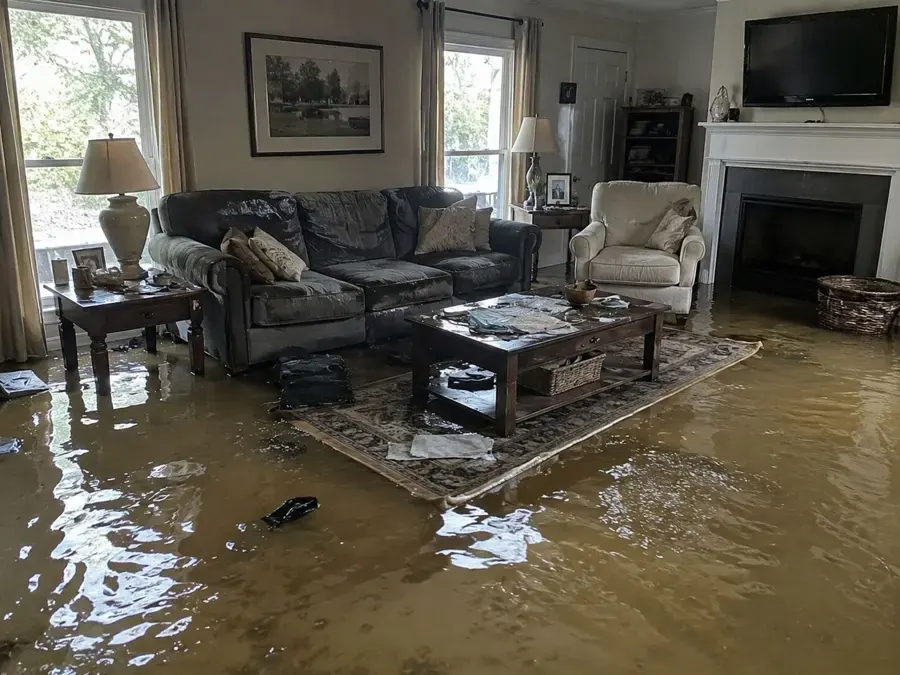
White House has had two recent lessons. In February 2025 two days of severe storms left yards, garages and streets under water, and on June 9, 2026 heavy rain flooded neighborhoods again. The city took about 30 flooding calls that time, compared with 86 in the earlier event, so some of the work paid off while the risk remains.
First steps for storm and creek flood cleanup in White House
- 1
Let the water stop rising
Keep away from moving water and from rooms where power is still on.
- 2
Cut power only from a dry panel
If the panel is wet, wait for the electric utility or an electrician.
- 3
Record the water line
Shoot the stain left on walls, furniture and appliances before anything is scrubbed.
- 4
Keep children and animals away
Runoff is Category 3, so close off the area and wear boots and gloves if you must enter.
What does storm and creek flood cleanup cost in White House, TN?
In White House, storm and creek flood cleanup commonly costs $4,000 to $30,000. Water depth, floor area, the amount of flooring, drywall and insulation that must go and how quickly drying begins decide where it lands.
Garage or a single room
$4,000 to $8,000- Extraction, flood cuts
- Antimicrobial pass
- Air movers, dehumidifiers
Whole ground floor
$8,000 to $18,000- Pad and flooring tear-out
- Containment, scrubbers
- Daily moisture logs
Entire home and crawl space
$18,000 to $30,000- Under-floor pumping
- Air handler check
- Extended dry-out
Ranges are typical, not a quote: category of water, square footage, material class and how fast drying started move the number most. Run the water damage cost calculator for a closer range.
How storm and creek flood cleanup is handled in White House
The tech who does the walkthrough maps moisture before any equipment goes down, so the drying plan matches what is actually wet. Equipment stays until the readings say dry, not until it looks dry.
- 1
Safety first, then mapping
The crew checks power and contamination, then maps moisture room by room.
- 2
Pump and tear out
Floodwater is extracted, and soaked porous materials are cut out and bagged.
- 3
Wash and treat
Remaining surfaces get washed and treated with an EPA-registered antimicrobial.
- 4
Dry inside containment
Dryers run behind the sheeting until readings reach the target.
Why flood water in a house is Category 3
Runoff crosses lawns, driveways, roads and construction ground before it reaches a door, and it carries whatever it picked up. The IICRC S500 standard classes it as Category 3 for that reason. Carpet, pad, insulation and the bottom of the drywall that it touched are cut out and bagged, not saved. Hard surfaces get cleaned and treated before any drying equipment starts.
- Drywall is cut away above the waterline, which lets the wall cavity dry.
- Furniture and belongings are photographed and listed before they leave the room.
- Water below the floor has its own pump-out, covered under crawl space water damage.
Work after the water recedes
Extraction comes first, then the mitigation team strips wet materials, washes surfaces and applies an EPA-registered antimicrobial. Containment holds dust in the affected rooms while dehumidifiers, air movers and HEPA scrubbers run. Someone on the drying team writes down readings every day until framing and subfloor meet the goal.
- Sheeting keeps contaminated dust from reaching dry rooms.
- Ducts and the air handler are looked over before the system is turned on.
- Daily humidity logs and photos build the claim file.
Safety and coverage after a White House flood
Never wade through moving water or enter a flooded room while power is on. Water that rises from outside is normally a flood insurance matter and not part of the usual homeowner form, so read your own policy before repairs begin. Structural drying describes the drying that follows the tear-out.
Storm and creek flood cleanup across White House and nearby towns
The flood crew works ZIP 37188 in Sumner County and Robertson County, from Covington Bend and Covington Heights to Bridle Creek, Dorris Farms and Raymond Hirsch Parkway.
The same service nearby: storm and creek flood cleanup in Gallatin, Millersville, Hendersonville.
Water damage restoration in White House · every town covered
Related water damage services in White House
Storm and Creek Flood Cleanup questions in White House, TN
Can carpet flooded by runoff be cleaned?
Not once Category 3 water has soaked it, so carpet and pad are removed. Hard floors are judged by meter readings and the subfloor underneath.
How far up are walls opened?
A few inches beyond the top of the wet zone, so the cavity and insulation can be inspected and dried rather than guessed at.
Does my homeowner policy pay for rising water?
Typically that falls under flood coverage, not a standard policy. Coverage depends on your policy, so check with your own insurer before work starts.
When will the house be dry?
Most flooded homes need 5 to 10 days following tear-out; hardwood, brick and under-floor space can take longer.
Is it safe to run the HVAC?
Hold off until the air handler and ducts are checked, since flood water in the ducts can carry contamination to every room.
Should I toss damaged items myself?
List and photograph them first; adjusters like to see losses before they reach the curb.
Flooded after a storm? Call for cleanup.
Category 3 water keeps soaking into framing as long as it sits. Extraction clears it first and drying begins right after.
(888) 849-5796Start White House flood removal- 24/7 dispatch for active water
- Dried to the IICRC S500 standard
- Daily readings for the claim file
- Find us on Google