Crawl Space Water Damage in White House, TN
Storm runoff in White House does not always stay in the yard. Some of it slides under the floor and lingers. The crawl space crew pumps it out, strips soaked liner and insulation, then dries the framing above.
(888) 849-5796Dry the space under the house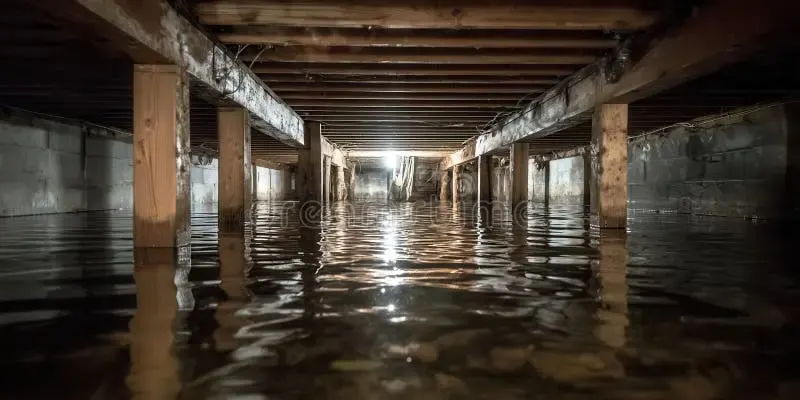
Severe storms over two days in February 2025 put standing water in yards, garages and streets in several White House subdivisions, and heavy rain did it again on June 9, 2026. A home with a crawl space can take some of that runoff underneath, where it stays well after the grass has drained.
First steps for crawl space water damage in White House
- 1
Keep out of the space
Standing water near wiring or ductwork can electrocute or contaminate.
- 2
Shut the main for pipe leaks
If a pipe is leaking, close the main valve in the garage or utility closet.
- 3
Shoot photos at the hatch
Show the depth of the water, soaked liner and drooping insulation for the claim.
- 4
Note floor changes upstairs
Spongy spots, cupping boards and a damp smell reveal how far moisture traveled.
What does crawl space water damage cost in White House, TN?
In White House, crawl space cleanup usually costs $1,200 to $15,000. A small clean pipe leak found early lands low; creek water, a large footprint, lots of soaked liner and insulation, or standing water left for weeks pushes it higher.
Small clean-water pipe leak
$1,200 to $3,000- Water pump-out
- Soaked liner removed
- Fans and dehumidifier
Entire space after a downpour
$3,000 to $7,500- Wet insulation hauled
- Treated framing
- Daily wood meter logs
Creek water or weeks underwater
$7,500 to $15,000- Category 3 handling
- Air scrubbers running
- Longer drying run
Ranges are typical, not a quote: category of water, square footage, material class and how fast drying started move the number most. Run the water damage cost calculator for a closer range.
How crawl space water damage is handled in White House
The tech who does the walkthrough maps moisture before any equipment goes down, so the drying plan matches what is actually wet. Equipment stays until the readings say dry, not until it looks dry.
- 1
Size up from the hatch
Crew members note the source, the depth and whether wires or ducts sit in the water.
- 2
Pump and strip
Pumps clear the water, and liner and insulation that soaked up water are bagged and hauled.
- 3
Treat and aim equipment
Dirty-water framing is treated, then an LGR unit and air movers target joists and sill plates.
- 4
Confirm with meters
Replacement liner waits until the wood reads like the dry sample.
How runoff finds the space under a house
According to the mayor, the worst February 2025 flooding hit older neighborhoods close to new construction sites. Stripped, graded ground sheds a downpour fast, and the water has to go somewhere. Near Honey Run Creek in Covington Bend, creek overflow counts as Category 3. Plumbing is the other route: a cracked supply fitting or a heater drain can leak beneath the floor for days.
- Downpour runoff entering through foundation vents, block walls and the hatch.
- Creek water that rises past the bank; see storm and creek flood cleanup.
- Plumbing leaks that drip onto the liner out of sight.
What the crew removes and what it dries
First the pumps run. Soaked liner and wet batts stay wet if left alone, so they are bagged and taken out. Framing that touched dirty water is treated with an EPA-registered antimicrobial. Then an LGR dehumidifier and air movers dry the joists, sill plates and underside of the subfloor until the wood meters near a dry sample, however many days that takes.
- Moisture readings are logged daily against a dry sample from elsewhere in the house.
- Ductwork below the floor gets inspected before the system is switched back on.
- New liner goes in last, once soil and framing both read dry.
Clues in the rooms above
Moisture from below drifts upward. Look for boards that cup, a musty odor near the floor registers or humidity that stays high even with the AC running. Gutters that carry roof water well away from the foundation help prevent a repeat, and structural drying covers the equipment used.
Crawl space water damage across White House and nearby towns
This crew serves ZIP 37188 across Sumner County and Robertson County, including Bridle Creek, Covington Bend, Cedar Brook, Orchard Park and the Highway 31W corridor.
The same service nearby: crawl space water damage in Gallatin, Millersville, Hendersonville.
Water damage restoration in White House · every town covered
Related water damage services in White House
Crawl Space Water Damage questions in White House, TN
What tells me water is under my White House home?
Odors indoors, floors that sag or cup, stubborn humidity and ducts that drip are typical. Shining a flashlight in from the hatch usually answers the question.
Is that water hazardous?
It crossed soil to get there, so expect Category 2 or 3, and creek water is always Category 3. Left alone it also humidifies the house, which lets mold begin on wood.
Why is the space wet if the yard looks fine?
Lawns shed runoff soon after the rain ends, but water under a floor has no slope to follow. It stays until a pump removes it.
Must the liner be removed?
When water pooled on top, normally yes. Soil and wood beneath it will not dry otherwise, and a new liner follows once the readings are right.
How many days will drying take?
Roughly 3 to 7 once the pump-out and wet insulation removal are done. Thick sill plates or a soaked subfloor can add time.
Will my hardwood flatten again?
Boards just starting to cup often settle back when the space beneath dries quickly. Waiting is what usually ends in replacement.
Space under the house flooded? Call now.
Wet joists keep soaking the rooms above until the moisture is drawn out. The drying team sets up as soon as pumping ends.
(888) 849-5796Dry the White House crawl space- 24/7 dispatch for active water
- Dried to the IICRC S500 standard
- Daily readings for the claim file
- Find us on Google