Water Extraction and Removal in Gallatin, TN
Every hour standing water sits, it wicks higher into drywall and deeper into subfloor. The extraction crew pulls it out with truck-mounted extraction so the drying equipment has less to fight.
(888) 849-5796Get standing water pulled out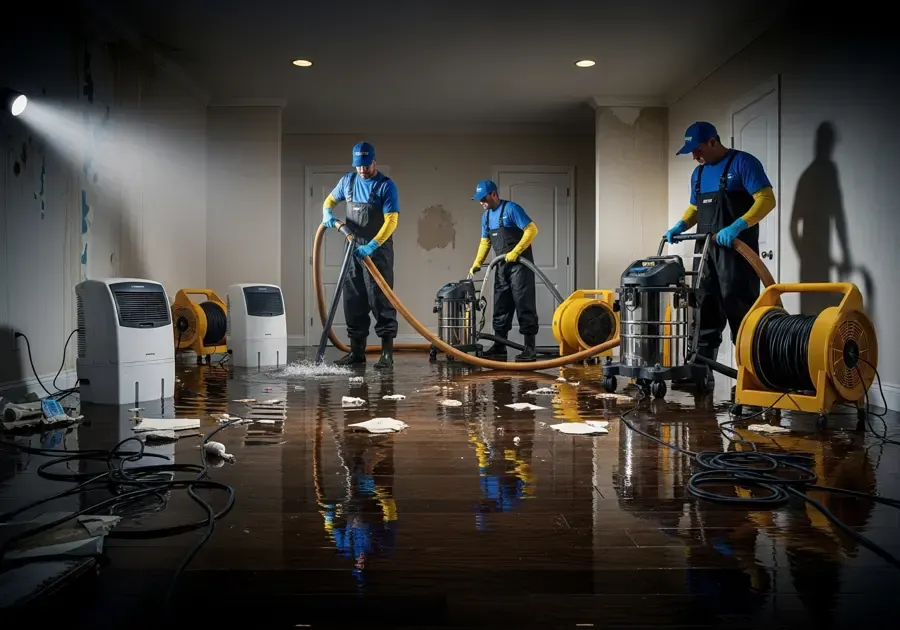
Extraction is the first and most important hour of a water loss. Removing water as liquid is far faster than evaporating it later, so the extraction crew gets the bulk of it out before the air movers and dehumidifiers go in.
First steps for water extraction and removal in Gallatin
- 1
Stop the source
Close the main valve or the fixture valve if the water is still running.
- 2
Keep away from outlets
Do not walk through water near cords, outlets or appliances.
- 3
Move what you can
Lift rugs, electronics and papers onto dry, high surfaces.
- 4
Do not run a household vacuum
Shop vacs are fine for small spills; a regular vacuum is a shock risk.
What does water extraction and removal cost in Gallatin, TN?
In Gallatin, TN, water extraction typically runs $800 to $5,500, depending on the water category, the square footage, the flooring and whether the water reached a crawl space or more than one level.
One room, clean water
$800 to $1,800- Truck-mounted extraction
- Moisture mapping
- Initial air movers
Several rooms or a floor
$1,800 to $3,500- Carpet and pad decisions
- Baseboard removal
- Dehumidifiers set
Gray or black water
$3,500 to $5,500- Contamination protocol
- Pad and material removal
- Antimicrobial
Ranges are typical, not a quote: category of water, square footage, material class and how fast drying started move the number most. Run the Gallatin water damage cost calculator for a closer range.
How water extraction and removal is handled in Gallatin
The tech who does the walkthrough maps moisture before any equipment goes down, so the drying plan matches what is actually wet. Equipment stays until the readings say dry, not until it looks dry.
- 1
Source and safety
The crew confirms the water is stopped and the power is safe.
- 2
Bulk extraction
Truck-mounted extraction and pumps pull the standing water.
- 3
Moisture mapping
Meters and thermal imaging find every wet material.
- 4
Drying setup
Air movers and LGR dehumidifiers sized to each room.
What extraction pulls out
Truck-mounted units have the vacuum power to pull water through carpet and pad, off hard floors and out of low spots. Weighted extraction tools press water out of carpet that a wet vac leaves behind. In a crawl space or garage, submersible pumps handle the depth first.
- Carpet and pad: extracted, then judged for drying in place or removal.
- Hardwood, tile and vinyl plank: water pulled from seams and the subfloor checked.
- Crawl spaces: pumped first; see crawl space water damage.
Mapping what is still wet
Water moves under baseboards and into wall bottoms where nobody can see it. The tech who does the walkthrough uses pinless meters and thermal imaging to map every wet material, so the drying plan covers the hidden wet areas, not just the visible puddle.
- Moisture map drawn on the first visit.
- Baseboards and toe kicks pulled where cavities read wet.
- Photos of every wet area before anything is removed.
Safety before extraction
Keep clear of standing water near outlets and cords, and shut power to wet rooms only if the panel is dry. Ready.gov covers water and electricity safety, and the EPA mold page explains why drying within 24 to 48 hours matters. After extraction, structural drying finishes the job.
Water extraction and removal across Gallatin and Sumner County
The Gallatin restoration crew covers ZIP 37066, from the Public Square and the older streets off Hartsville Pike out to Fairvue Plantation, Foxland Harbor and the Station Camp area.
Nearby coverage reaches Hendersonville, White House, Millersville, Castalian Springs, Portland.
Related water damage services in Gallatin
Water Extraction and Removal questions in Gallatin, TN
Can I extract the water myself with a shop vac?
For a small, clean spill, yes. For anything that soaked carpet pad, reached walls or a crawl space, a shop vac leaves most of the water behind.
Will my carpet be saved?
Clean water caught early often dries in place after extraction. Gray or black water means the pad, and often the carpet, comes out.
How long does extraction take?
Most rooms take an hour or two. Large losses and crawl spaces take longer, and drying runs for days after.
Why are baseboards removed?
Water hides in the wall bottom behind them. Pulling them lets that cavity dry instead of trapping water.
Do I need to leave the house?
Usually not for a clean water loss. Sewage and creek floodwater may require keeping the area closed off.
What happens after extraction?
Air movers and dehumidifiers run with daily readings until wet materials reach the drying goal.
Standing water in Gallatin? Get it out now.
Water pulled out as liquid now is water that never has to be dried out of the walls later.
(888) 849-5796Pull the water out now- 24/7 dispatch for active water
- Dried to the IICRC S500 standard
- Daily readings for the claim file
- Find us on Google