Storm and Creek Flood Cleanup in Gallatin, TN
When a creek comes over its banks, the water that gets inside is Category 3 from the first minute. The flood crew removes what it touched, cleans and treats the structure and dries it to a measured goal.
(888) 849-5796Call for Gallatin flood cleanup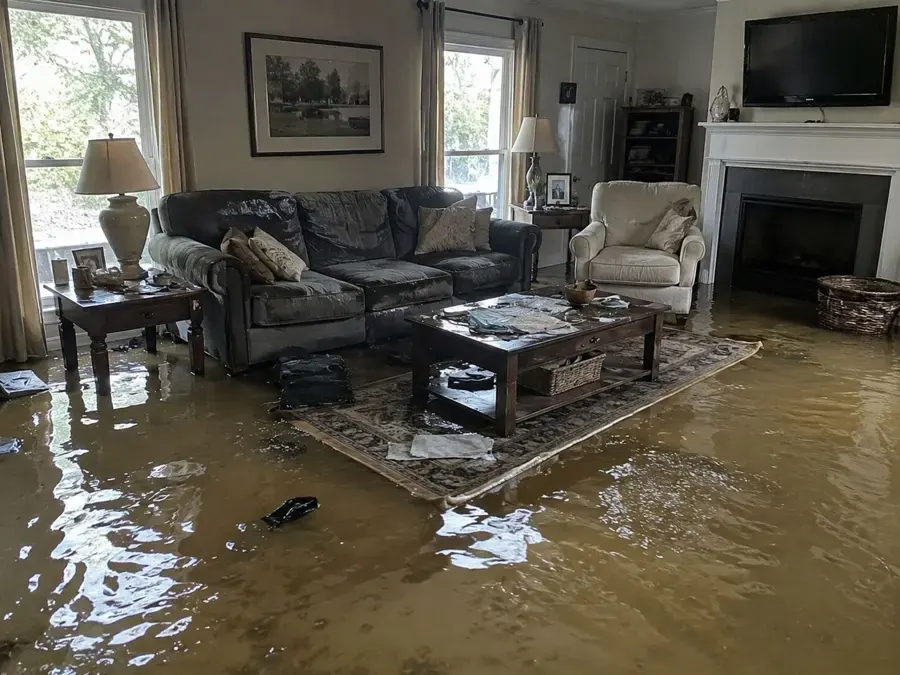
Gallatin has flooded the same way more than once. The May 2010 storm dropped up to 14 inches of rain on the city, and about 400 FEMA assistance applications came from along East Camp Creek and its tributaries. In May 2017 Station Camp Creek flooded roads after up to 7 inches of rain, and in May 2024 Town Creek reached floors on Barton Drive.
First steps for storm and creek flood cleanup in Gallatin
- 1
Wait for the water to stop rising
Stay out of moving water and away from flooded rooms with live power.
- 2
Turn off power if safe
Only from a dry panel; otherwise wait for the utility or an electrician.
- 3
Document the high-water mark
Photograph the water mark on walls, furniture and appliances before cleanup.
- 4
Keep people out
Creek water is Category 3; keep children and pets away and wear boots and gloves.
What does storm and creek flood cleanup cost in Gallatin, TN?
In Gallatin, TN, storm and creek flood cleanup typically runs $4,000 to $30,000, depending on how high the water rose, the square footage, how much drywall, flooring and insulation must come out and how fast drying started.
Garage or one room
$4,000 to $8,000- Extraction and flood cuts
- Antimicrobial treatment
- Air movers and dehumidifiers
Ground floor of a home
$8,000 to $18,000- Flooring and pad removal
- Containment and HEPA
- Daily moisture logs
Whole home with crawl space
$18,000 to $30,000- Crawl space pump-out
- Ductwork checks
- Extended structural drying
Ranges are typical, not a quote: category of water, square footage, material class and how fast drying started move the number most. Run the Gallatin water damage cost calculator for a closer range.
How storm and creek flood cleanup is handled in Gallatin
The tech who does the walkthrough maps moisture before any equipment goes down, so the drying plan matches what is actually wet. Equipment stays until the readings say dry, not until it looks dry.
- 1
Safety and assessment
Power, structure and contamination checked; moisture mapped room by room.
- 2
Extraction and removal
Floodwater pumped out; porous materials it touched cut out and bagged.
- 3
Clean and treat
Surfaces washed and treated with an EPA-registered antimicrobial.
- 4
Contained drying
Air movers, LGR units and HEPA scrubbers until readings reach the goal.
Why floodwater is handled as Category 3
Creek water picks up soil, fuel, fertilizer and sewage on its way in. The IICRC S500 standard treats it as Category 3, which means porous materials it touched, such as carpet, pad, insulation and the lower drywall, are removed rather than dried. Hard surfaces are cleaned and treated before drying starts.
- Flood cuts remove drywall above the water mark so wall cavities can dry.
- Contents that touched floodwater are photographed and listed before removal.
- Crawl space water gets its own pump-out; see crawl space water damage.
What the flood crew does after the water drops
The extraction crew pumps and extracts what is left, then the mitigation team removes wet materials, cleans and applies an EPA-registered antimicrobial. Air movers, LGR dehumidifiers and HEPA air scrubbers run in a contained area, and the drying team logs readings every day until framing and subfloor reach the drying goal.
- Containment keeps contaminated dust out of clean rooms.
- Ductwork that took on water is checked before the HVAC runs.
- Daily psychrometric logs and photos go into the claim file.
Staying safe around Gallatin floodwater
Never walk through moving water or into a flooded room with the power on. National Weather Service flood safety and OSHA flood cleanup hazards both cover the risks. Rising surface water usually falls under flood coverage, not a standard homeowner policy, so check your own policy before repairs; structural drying explains the drying that follows.
Storm and creek flood cleanup across Gallatin and Sumner County
The Gallatin restoration crew covers ZIP 37066, from the Public Square and the older streets off Hartsville Pike out to Fairvue Plantation, Foxland Harbor and the Station Camp area.
Nearby coverage reaches Hendersonville, White House, Millersville, Castalian Springs, Portland.
Related water damage services in Gallatin
Storm and Creek Flood Cleanup questions in Gallatin, TN
Can flooded carpet be saved?
Not after creek or storm floodwater. It is Category 3, so carpet and pad are removed. Hard flooring is judged by readings and the subfloor underneath.
How high do the walls get cut?
Drywall is usually cut above the highest wet reading, often 2 to 4 feet up, so the cavity and insulation can dry and be inspected.
Does homeowners insurance cover creek flooding?
Rising surface water usually needs flood coverage, not a standard homeowner policy. Coverage depends on your policy, so check with your own insurer.
How long until the house is dry?
Most flooded homes dry in 5 to 10 days after removal. Crawl spaces, hardwood and brick can stretch that.
Is the HVAC safe to run after a flood?
Not until ductwork and the air handler are checked. Ducts that took on creek water can spread contamination through the house.
What should I throw out myself?
Wait for photos and a list first. Insurers want to see damaged items before they are discarded.
Flooded by a Gallatin creek? Call for cleanup.
Floodwater keeps soaking into framing every hour it sits. The extraction crew pulls it out and the drying starts right behind it.
(888) 849-5796Start Gallatin flood removal- 24/7 dispatch for active water
- Dried to the IICRC S500 standard
- Daily readings for the claim file
- Find us on Google