Storm and Creek Flood Cleanup in Hendersonville, TN
Drakes Creek, Station Camp Creek and the Old Hickory Lake shore have all sent water into Hendersonville property, and floodwater is Category 3 from the moment it crosses a threshold. The flood crew removes what it soaked and dries the structure to a reading.
(888) 849-5796Call about Hendersonville flood cleanup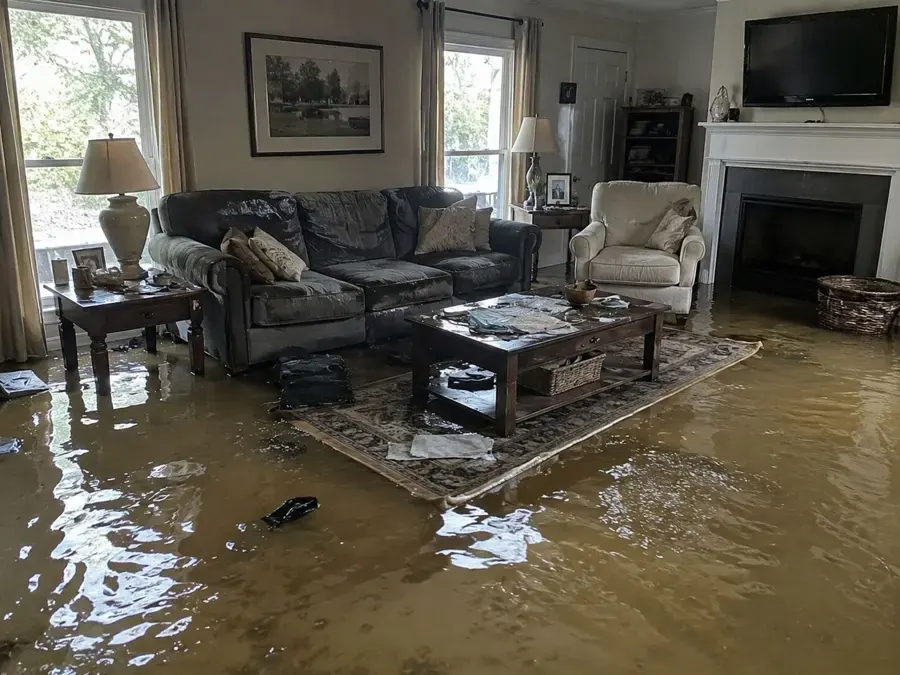
Hendersonville floods in the same low spots again and again. On May 2, 2010, Old Hickory Dam opened all of its floodgates and lake water came over Gallatin Road at Drakes Creek Park. Station Camp Creek is named as a flooding source in the Sumner County Flood Insurance Study, and Drakes Creek Park flooded three times by April 4, 2025.
First steps for storm and creek flood cleanup in Hendersonville
- 1
Wait until the water stops rising
Stay out of moving water and out of rooms where wiring is under water.
- 2
Power down from a dry panel
If the breaker box is wet, leave it alone and wait for an electrician.
- 3
Mark the high-water line
Photograph the stain on walls, furniture and appliances before anything moves.
- 4
Keep kids and pets out
Lake and creek water is Category 3, so boots and gloves are the minimum.
What does storm and creek flood cleanup cost in Hendersonville, TN?
Hendersonville flood cleanup usually runs $4,000 to $30,000. Water depth, square footage, how much flooring and drywall must come out and how soon drying begins decide where a job lands in that range.
Garage or a single room
$4,000 to $8,000- Extraction and flood cuts
- Antimicrobial wash
- Fans and dehumidifiers
Whole ground floor
$8,000 to $18,000- Floor and pad removal
- Containment and HEPA
- Daily moisture logs
House and crawl space
$18,000 to $30,000- Crawl space pump-out
- Duct inspection
- Long structural drying
Ranges are typical, not a quote: category of water, square footage, material class and how fast drying started move the number most. Run the water damage cost calculator for a closer range.
How storm and creek flood cleanup is handled in Hendersonville
The tech who does the walkthrough maps moisture before any equipment goes down, so the drying plan matches what is actually wet. Equipment stays until the readings say dry, not until it looks dry.
- 1
Safety check and mapping
Power, structure and contamination are reviewed before meters trace the wet rooms.
- 2
Pump and strip
Floodwater leaves first, then soaked flooring, pad and low drywall.
- 3
Wash and treat
Every surface the water touched is cleaned and sprayed with an EPA-registered antimicrobial.
- 4
Dry in containment
Equipment runs behind plastic until the readings reach the goal.
Why creek and lake water gets the Category 3 label
Water that has run across yards, ditches and roads carries soil, fuel and sewage into the house with it. Under the IICRC S500 standard that makes it Category 3, so anything porous it reached is removed instead of dried. Hard surfaces are washed and treated first.
- Carpet, pad and insulation that sat in floodwater are bagged and hauled out.
- Drywall is cut above the highest wet reading so the cavity can dry.
- Water under the floor gets its own pump-out; see crawl space water damage.
How the flood crew works once the creek drops
The extraction crew clears what is left standing, then the mitigation team strips the wet materials and treats the structure with an EPA-registered antimicrobial. Air movers, LGR dehumidifiers and HEPA scrubbers run inside containment while clay-soaked crawl spaces and wall bases come down to a dry reading.
- Plastic containment keeps dirty dust away from rooms that stayed dry.
- Ductwork that took on water is checked before the HVAC runs again.
- Photos and logged readings build the claim file.
Flood insurance and safety around the water
Hendersonville takes part in the National Flood Insurance Program and regulates floodplain building under city code. Rising surface water is usually a flood policy matter rather than a standard homeowner one, so owners check their own policy before repairs. Structural drying covers what happens after the cleanup.
Storm and creek flood cleanup across Hendersonville and nearby towns
The Hendersonville flood crew works ZIP codes 37075 and 37077, including homes near Drakes Creek, Station Camp, Sanders Ferry Road and the Indian Lake Peninsula shoreline.
The same service nearby: storm and creek flood cleanup in Gallatin, Millersville, Mount Juliet.
Water damage restoration in Hendersonville · every town covered
Related water damage services in Hendersonville
Storm and Creek Flood Cleanup questions in Hendersonville, TN
Can carpet that sat in creek water be kept?
No. Creek and lake water is Category 3, so the carpet and pad come out. Tile and hardwood are judged by readings, along with the subfloor below them.
How far up are the walls cut?
Drywall is cut a little above the highest wet reading. That opens the cavity so insulation can be inspected and the studs can dry.
Does a homeowner policy pay for flooding?
Rising surface water is usually a flood policy question, not a standard homeowner one. Coverage depends on the policy, so owners check with their own insurer.
How long until the house is dry?
Most flooded Hendersonville homes dry in roughly 5 to 10 days once the wet materials are out. Brick, hardwood and crawl spaces can run longer.
Is it safe to turn the HVAC back on?
Not before the air handler and ducts are checked. Ducts that took on floodwater can spread dirt and bacteria through every room.
Should I haul flooded belongings to the curb?
Hold off until photos and a list exist. Adjusters want to see damaged items first, and the crew can sort what is salvageable.
Flooded in Hendersonville? Call for cleanup.
Floodwater keeps soaking framing for as long as it sits. The extraction crew pulls it out and the drying team follows right behind.
(888) 849-5796Start Hendersonville flood cleanup- 24/7 dispatch for active water
- Dried to the IICRC S500 standard
- Daily readings for the claim file
- Find us on Google