Water Extraction in Lebanon, TN
When a Lebanon creek spills or a pipe lets go, water spreads toward carpet, baseboards and cabinets. The extraction crew pulls it up as liquid before it soaks in, then maps what stays wet.
(888) 849-5796Get Lebanon standing water pumped out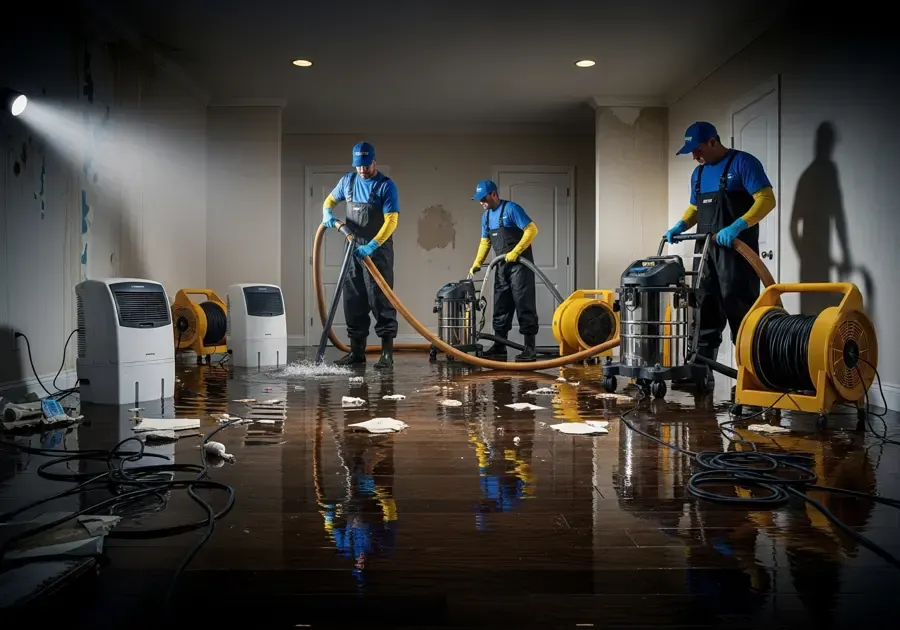
Pulling water out as liquid beats waiting for it to evaporate. A heavy rain such as the one in March 2021, when about 7 inches fell in roughly 24 hours, shows why: water that sits for a day is already inside drywall and under flooring.
First steps for water extraction and removal in Lebanon
- 1
Stop the source
Shut the main or the fixture valve. Water that keeps arriving undoes every pump.
- 2
Stay clear of outlets
Keep off wet floors near cords and plugs, and switch breakers only from dry ground.
- 3
Lift small items
Raise rugs, boxes and electronics to dry surfaces so they stop wicking up water.
- 4
Skip the household vacuum
A standard vacuum is not built for water and can shock the user.
What does water extraction and removal cost in Lebanon, TN?
Lebanon water extraction usually runs from $800 to $5,500. One clean room is the low end, while several rooms, gray or black water and a deep pool push the job higher.
One room, clean water
$800 to $1,800- Pump and vacuum
- Carpet pressed
- Meter check
Multiple rooms or a full floor
$1,800 to $3,500- Truck-mounted unit
- Pad judged
- Moisture map
Gray or black water
$3,500 to $5,500- Contaminated removal
- Sanitizing
- Containment
Ranges are typical, not a quote: category of water, square footage, material class and how fast drying started move the number most. Run the water damage cost calculator for a closer range.
How water extraction and removal is handled in Lebanon
The tech who does the walkthrough maps moisture before any equipment goes down, so the drying plan matches what is actually wet. Equipment stays until the readings say dry, not until it looks dry.
- 1
Source and safety
The crew confirms the water is off and the power is safe.
- 2
Bulk removal
Pumps and truck-mounted units lift the pool and carpet water.
- 3
Map the wet spots
Meters and thermal imaging trace water into walls and subfloors.
- 4
Stage the drying
Air movers and a dehumidifier are placed.
What gets extracted in a Lebanon loss
Equipment is chosen for the surface. Truck-mounted units pull water through carpet and pad, weighted tools press it from rugs, and submersible pumps take the depth off garages, low rooms and downtown storefronts.
- Carpet and pad: extracted, then judged for drying in place or removal.
- Hardwood and tile: water drawn from seams, with the subfloor checked.
- Garages and low rooms: pumped first, then vacuumed.
Finding the moisture left behind
Extraction ends with meters, not with a dry-looking floor. Water runs under baseboards and into wall bottoms, so the crew scans walls, subfloors and ceilings below with moisture meters and thermal imaging. Creek water and sewage change the plan, so see storm and creek flood cleanup.
Safety before the hoses come out
Standing water near outlets, extension cords or a wet panel is an electrical hazard. The crew has power cut or isolated first, then checks whether the water is clean, gray or black. A household vacuum should never be used on water, since it can shock the person holding it. Structural drying takes over once the bulk of the water is out.
Water extraction and removal across Lebanon and nearby towns
The extraction crew serves ZIP 37087 and 37090, from Lebanon Square shops and Greenlawn to Hartmann Crossing, Walker Estates and the Hartmann Drive corridor.
The same service nearby: water extraction and removal in Gallatin, Mount Juliet, Hendersonville.
Related water damage services in Lebanon
Water Extraction and Removal questions in Lebanon, TN
Why is fast extraction so important?
Water spreads across a floor and wicks into drywall, subfloor and furniture. Taking it out as liquid is much quicker than drying it as vapor.
Will a shop vacuum manage a flooded Lebanon room?
Small spills, yes. A real flood needs truck-mounted units, which pull far more water through carpet and pad than a shop vacuum.
Does extraction also dry the house?
No. Extraction takes out liquid only. Walls and framing still need dehumidifiers and air movers until readings match a dry reference.
What if the water came from a creek?
Creek water is Category 3, so it is extracted and the soaked porous materials are removed instead of dried. Surfaces are then sanitized.
Do Square shops need different handling?
Older masonry buildings hold moisture in brick and plaster, so extraction is followed by phased drying that lets the business reopen sooner.
Should wet carpet be saved?
Clean water caught early often lets carpet dry in place. Gray or black water means the pad and carpet are usually discarded.
Water on the floor in Lebanon? Call now.
Standing water spreads further into walls with each passing day. The extraction crew pumps the water out and maps what is left.
(888) 849-5796Lebanon water removal- 24/7 dispatch for active water
- Dried to the IICRC S500 standard
- Daily readings for the claim file
- Find us on Google