Storm and Creek Flood Cleanup in Lebanon, TN
Lebanon creeks rise fast and leave mud, silt and sewage-tainted water inside the house. The flood crew pumps it out, removes what soaked it up, sanitizes the framing and dries what can be saved.
(888) 849-5796Call for Lebanon flood cleanup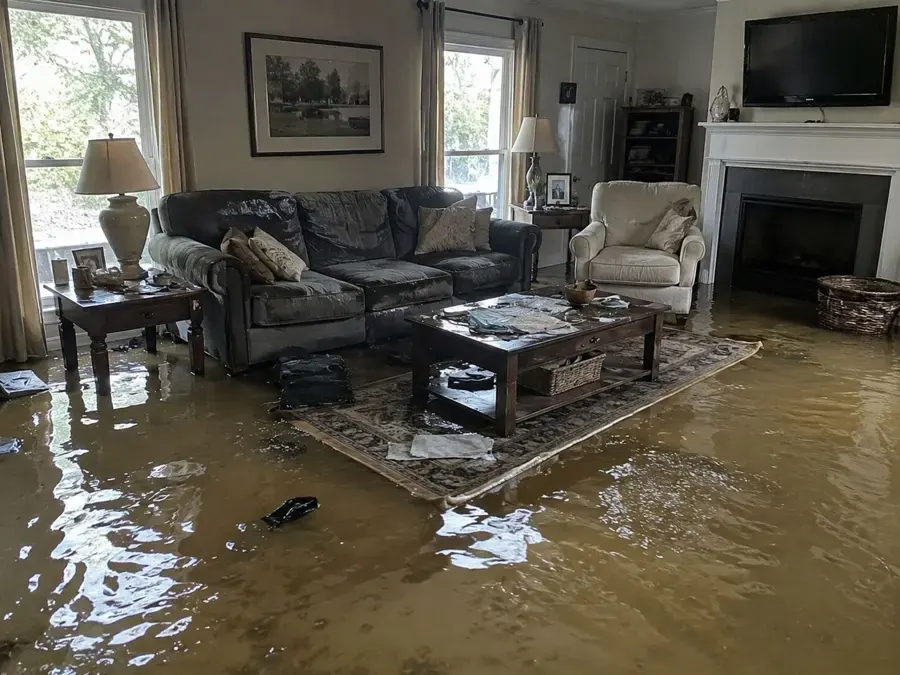
Flood records in Lebanon begin in 1928, and significant flooding has come back about every 10 to 20 years since. The creeks do not give much warning. Sinking Creek is described as very flashy, so a hard rain upstream can put water in the street before cleanup crews are even called.
First steps for storm and creek flood cleanup in Lebanon
- 1
Wait for the water to crest
Do not wade in while the creek is rising. Floodwater hides open drains and live wiring.
- 2
Cut power if the panel is dry
Switch off breakers only from a dry floor. If the panel is wet, leave it alone.
- 3
Mark the high-water line
Photograph the line on walls and furniture. The claim file leans on that evidence.
- 4
Keep children and pets away
Mud and standing water carry bacteria, so everyone stays out until cleanup ends.
What does storm and creek flood cleanup cost in Lebanon, TN?
Lebanon flood cleanup usually costs from $4,000 to $30,000. A garage or one room sits near the bottom, while a whole house, a crawl space and a lot of removed material push it toward the top.
Garage or one room
$4,000 to $8,000- Mud and water out
- Flood cuts
- Surfaces sanitized
Ground floor
$8,000 to $18,000- Flooring removed
- Drywall cut back
- Structural drying
Whole house with crawl space
$18,000 to $30,000- Full demolition of wet areas
- Containment
- HEPA air scrubbing
Ranges are typical, not a quote: category of water, square footage, material class and how fast drying started move the number most. Run the water damage cost calculator for a closer range.
How storm and creek flood cleanup is handled in Lebanon
The tech who does the walkthrough maps moisture before any equipment goes down, so the drying plan matches what is actually wet. Equipment stays until the readings say dry, not until it looks dry.
- 1
Safety check
The crew sets hazards, power and the water line before any equipment starts.
- 2
Extract and remove
Silt is pumped out and soaked flooring, pad and insulation are carried off.
- 3
Clean and treat
Surfaces and framing are scrubbed and sprayed with an EPA-registered antimicrobial.
- 4
Dry behind containment
Dehumidifiers run until readings reach the dry reference.
Why creek water counts as Category 3
Floodwater arrives carrying soil, fuel, fertilizer and sometimes sewage from overloaded drains. That makes it grossly contaminated the moment it crosses the threshold. Wilson County names Sinking Creek, Spring Creek, Suggs Creek, Cedar Creek, Fall Creek, Round Lick Creek, Smith Fork Creek and Stoner Creek as streams that routinely leave their banks.
- Carpet, pad and soaked insulation are removed rather than dried.
- Drywall is cut above the wet line, often well above it, where wicking has run.
- Hard surfaces and framing are cleaned, then treated with an antimicrobial.
What the flood crew does once the creek drops
Pumps go first, because mud left in place cakes and hides how far the water reached. Then the crew sorts what can be cleaned from what has to go. Large rain days such as the one in March 2021 can leave many buildings at once, so a clear written scope helps every claim. Water extraction covers the pump-out stage.
- Truck-mounted units and submersible pumps clear standing water.
- Dehumidifiers and air movers are staged after demolition, not before.
- Readings are logged each day until the framing matches a dry reference.
Staying safe in a flooded Lebanon house
Keep out of rooms with water near outlets, and treat every surface the creek touched as contaminated. If a home sits in a flood zone, Lebanon applies a 50 percent substantial damage rule to such buildings, so photographs and a written scope matter early. Sewage backup cleanup explains the contamination steps in detail.
Storm and creek flood cleanup across Lebanon and nearby towns
The flood crew works ZIP 37087 and 37090, from the Lebanon Square and South Cumberland Street to the Spencer Creek area near Northern Road and the subdivisions off Hunters Point Pike.
The same service nearby: storm and creek flood cleanup in Gallatin, Mount Juliet, Hendersonville.
Related water damage services in Lebanon
Storm and Creek Flood Cleanup questions in Lebanon, TN
How often do Lebanon creeks flood homes?
Records starting in 1928 show significant flooding about every 10 to 20 years, with major events in February 1989, May 2010 and March 2021.
Is a few inches of creek water really that serious?
Yes. Floodwater is Category 3 at any depth, and drywall, carpet and insulation that soaked it up are generally removed rather than dried.
What happened on the Lebanon Square in 2021?
About 7 inches of rain fell in roughly 24 hours, Town Creek overflowed on the Square, and TEMA reported 50 downtown businesses with water damage.
Does flood damage count as a normal homeowner claim?
Rising water usually falls under separate flood coverage, not a standard homeowner policy. Coverage depends on the policy, so ask your insurer before repairs begin.
Why do some streets near the Square flood repeatedly?
South Cumberland Street has chronic flooding, and Sinking Creek runs beneath and around the Square, so the same low ground takes water storm after storm.
How long does a flooded house take to dry?
Typically 5 to 10 days after demolition. The wet materials come out first, then the dehumidifiers run until framing reads dry.
Flooded in Lebanon? Call now.
Silt and creek water settle into walls and floors fast. The flood crew pumps, removes and sanitizes before drying begins.
(888) 849-5796Lebanon flood crew- 24/7 dispatch for active water
- Dried to the IICRC S500 standard
- Daily readings for the claim file
- Find us on Google