Structural Drying in Lebanon, TN
Humid summers slow evaporation in Lebanon, and old masonry on the Square holds water long after a creek retreats. The drying team sizes equipment to the class of loss and runs it until readings say dry.
(888) 849-5796Start Lebanon structural drying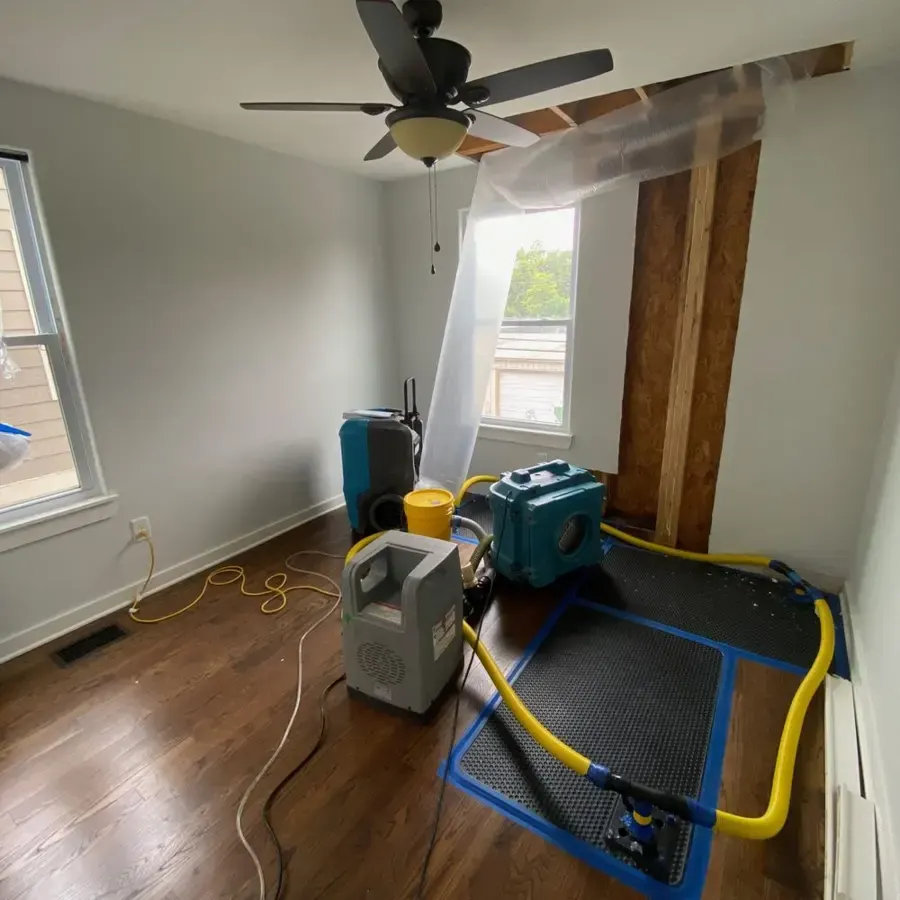
Pulling out the standing water is only half a dry-out. What remains is moisture locked in wood, plaster and masonry, and it leaves only as vapor. Lebanon summers run in the low 90s with humid subtropical air, so that vapor has to be caught by equipment rather than left to drift away.
First steps for structural drying and dehumidification in Lebanon
- 1
Keep windows shut in humid weather
Outside air adds moisture that the dehumidifiers must remove.
- 2
Leave the equipment running
Stopping fans and dehumidifiers early leaves hidden moisture behind.
- 3
Keep doors as the crew set them
Closed or open doors steer the air through the wet areas.
- 4
Report new smells or stains
A fresh stain can mean water still sits in a cavity.
What does structural drying and dehumidification cost in Lebanon, TN?
Lebanon structural drying typically costs $1,000 to $8,000. A limited area stays low, while several rooms and dense materials like hardwood, plaster and masonry take longer and add equipment. Humid weather adds drying time.
Class 1 or 2, one area
$1,000 to $2,500- Air movers
- One dehumidifier
- Daily readings
Class 3, several rooms
$2,500 to $5,000- More dehumidifiers
- Wall cavity drying
- Longer run time
Class 4, hardwood or plaster
$5,000 to $8,000- Desiccant units
- Floor mat systems
- Extended logging
Ranges are typical, not a quote: category of water, square footage, material class and how fast drying started move the number most. Run the water damage cost calculator for a closer range.
How structural drying and dehumidification is handled in Lebanon
The tech who does the walkthrough maps moisture before any equipment goes down, so the drying plan matches what is actually wet. Equipment stays until the readings say dry, not until it looks dry.
- 1
Classify the loss
The crew sets the class and category from the wet materials.
- 2
Set the equipment
Air movers, dehumidifiers and mats are placed to cover each wet surface.
- 3
Read each day
Meters track progress and the setup adjusts.
- 4
Pull at the goal
Equipment leaves once materials reach the dry reference.
Why the loss class decides the equipment
Class 1 and 2 losses involve limited, low-porosity materials or wet carpet and walls, and Class 3 and 4 involve soaked ceilings, deep hardwood, plaster and masonry. The older houses in the Cumberland University and West Main Street districts tend toward the higher classes, because original hardwood and plaster hold a lot of water.
- Air movers sweep dry air over surfaces so moisture lifts off.
- LGR dehumidifiers pull it out of the air.
- Desiccant units handle dense materials and cooler conditions.
What counts as dry
The target is the reading on a dry sample from the same house, not a number from a chart. Daily meter checks tell the crew when to move air movers, add a dehumidifier or pull equipment. Brick on the Lebanon Square can hold moisture after creek flooding, so it is read just as closely as the wood floors.
- Mats pull moisture up from under hardwood.
- Walls are drilled only where meters demand it.
Why dry framing protects the rebuild
Building over wet framing seals moisture in and brings stains and odors back. A signed-off log lets painters, floor installers and adjusters work from the same facts. Water extraction is the step that comes before drying, and crawl space water damage covers drying under the floor.
Structural drying and dehumidification across Lebanon and nearby towns
The drying team serves ZIP 37087 and 37090, from historic Greenlawn and West Main Street homes and the Lebanon Square to newer neighborhoods near Hunters Point Pike and Coles Ferry Pike.
The same service nearby: structural drying and dehumidification in Gallatin, Mount Juliet, Hendersonville.
Related water damage services in Lebanon
Structural Drying and Dehumidification questions in Lebanon, TN
Why does drying take several days?
Moisture in framing and floors leaves slowly as vapor, so equipment runs until every material reads dry.
How does the crew know it is dry?
Meters compare wet materials to a dry sample from the same house, and the job ends when the readings are within 2 to 4 points of it.
Why are historic houses harder to dry?
Original hardwood and plaster soak up a lot of water and release it slowly, so they often need desiccant units and closer readings.
Does summer humidity matter?
Yes. Humid subtropical air slows evaporation, so more dehumidification is needed than in dry weather.
Is the noise and heat normal?
Yes. Air movers and dehumidifiers are loud and warm the room, but the warmth helps moisture leave.
Can wet drywall be saved?
Clean-water drywall often dries in place if caught early. Soaked board, or board touched by Category 3 water, is removed.
Materials still wet in Lebanon? Call now.
Moisture left in framing causes stains, odors and failed repairs. The drying team runs equipment until readings reach the goal.
(888) 849-5796Lebanon drying team- 24/7 dispatch for active water
- Dried to the IICRC S500 standard
- Daily readings for the claim file
- Find us on Google