Structural Drying and Dehumidification in Mount Juliet, TN
Water climbs well above the wet edge, so drying a wall means drying the framing and cavity behind it. The drying team sets equipment and measures until readings match the dry reference.
(888) 849-5796Get the Mount Juliet structure dried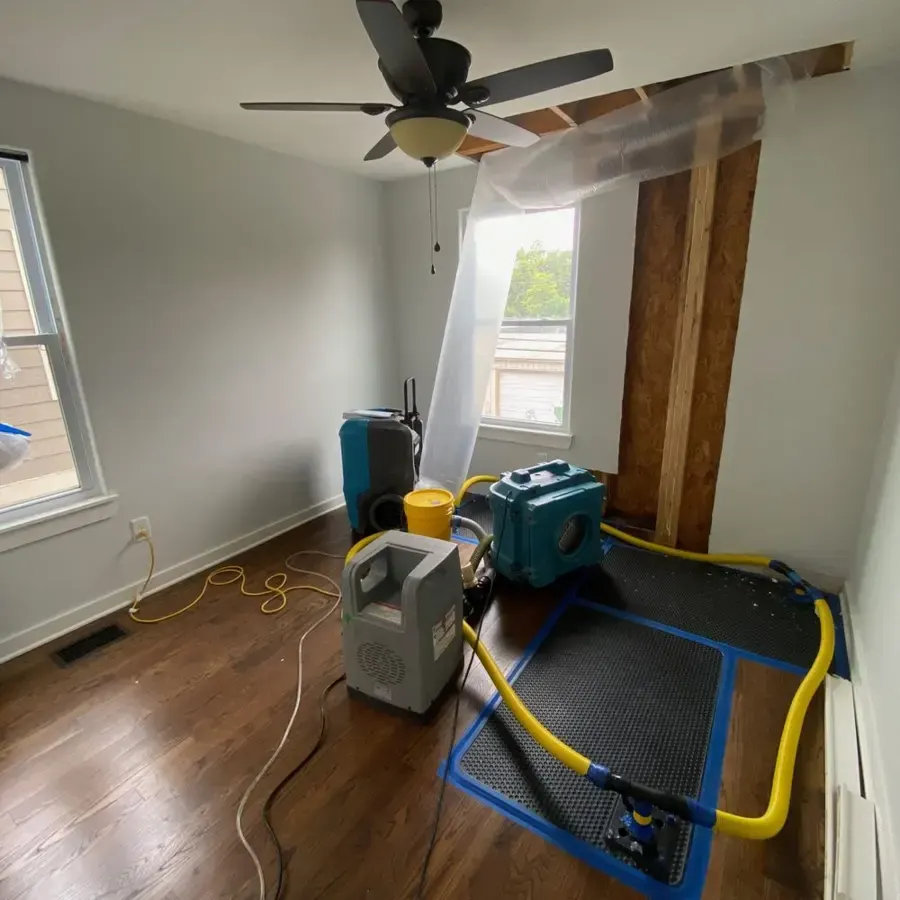
After the March 2021 flood, Valley Center businesses replaced wall board up to 4 feet from the floor, though the water stood up to three feet deep. That gap shows how far moisture wicks above the visible wet edge.
First steps for structural drying and dehumidification in Mount Juliet
- 1
Open the room
Once drying starts, keep doors and windows shut so the dehumidifiers can work.
- 2
Leave the equipment alone
Leave air movers where they sit, since the readings set their placement.
- 3
Move belongings out
Lift items off wet floors so the air can reach the walls.
- 4
Keep the log
Each day's readings and photos go into the claim file.
What does structural drying and dehumidification cost in Mount Juliet, TN?
Expect structural drying in Mount Juliet, TN, to land between $1,000 and $8,000. Price moves with the class of loss, how many rooms and floors are wet, dense materials like hardwood or plaster and the days the equipment runs.
Light loss, one area
$1,000 to $2,500- Air movers
- LGR dehumidifier
- Daily readings
Heavy loss, several rooms
$2,500 to $5,000- Wall cavity drying
- Ceiling drying
- Extended equipment run
Dense materials, deep water
$5,000 to $8,000- Drying mats
- Desiccant dehumidifier
- Longer run
Ranges are typical, not a quote: category of water, square footage, material class and how fast drying started move the number most. Run the water damage cost calculator for a closer range.
How structural drying and dehumidification is handled in Mount Juliet
The tech who does the walkthrough maps moisture before any equipment goes down, so the drying plan matches what is actually wet. Equipment stays until the readings say dry, not until it looks dry.
- 1
Map and class
Meters and a thermal camera set the class.
- 2
Stage the equipment
Equipment goes in by room size and class.
- 3
Read each day
Readings are logged against a dry reference.
- 4
Pull when dry
Equipment leaves only when readings reach the goal.
Why the class of loss sets the gear
A Class 1 loss involves little water and low-porosity materials, while Class 4 involves materials that hold water deeply, such as hardwood, plaster and brick. The class sets the count of fans and dehumidifiers in a room and the days they stay.
- Class 1 and 2: one area, drywall and carpet.
- Class 3: ceilings, walls and insulation soaked from above.
- Class 4: hardwood, plaster and masonry that hold water.
Where the finish point comes from
The team takes readings on day one and records a dry reference from an unaffected room in the same house. Equipment keeps running until framing and subfloor measure within 2 to 4 points of that reference. See water extraction for the step before drying.
- LGR dehumidifiers pull moisture from the air.
- Air movers push dry air across surfaces.
- Drying mats draw water from hardwood floors.
What repair crews need to see
Rebuilding over damp framing traps moisture, which can warp floors and feed mold, so contractors and insurers both want a documented dry reading before the repair crew starts. The Mount Juliet hub lists the other losses that need this step.
Structural drying and dehumidification across Mount Juliet and nearby towns
The Mount Juliet drying team works ZIP 37122, 37121 and 37138, from Providence and The Villages to Bradford Park, Valley Center and Jackson Hills.
The same service nearby: structural drying and dehumidification in Gallatin, Hendersonville, Lebanon.
Water damage restoration in Mount Juliet · every town covered
Related water damage services in Mount Juliet
Structural Drying and Dehumidification questions in Mount Juliet, TN
How long does structural drying take?
Most jobs take 3 to 5 days, and hardwood, plaster or brick can stretch that.
How do I know when it is dry?
When framing and subfloor measure within 2 to 4 points of the dry sample taken in the same house.
Can I just run my own fans?
Fans move air but do not remove moisture, while dehumidifiers pull the water out of the air so it cannot settle elsewhere.
Why are the fans staying on?
Readings, not the clock, decide. Pulling them early leaves moisture inside the framing.
Will drying stop mold?
Fast drying removes the moisture mold needs, though materials left wet too long can still grow it.
Does insurance pay for drying?
Covered water losses usually include drying, and logged readings support the claim. Confirm with your own insurer.
Water in the walls? Call now.
Moisture lingers in framing long after paint looks dry. The drying team sets equipment, measures daily and stops only at the goal.
(888) 849-5796Mount Juliet structural drying help- 24/7 dispatch for active water
- Dried to the IICRC S500 standard
- Daily readings for the claim file
- Find us on Google