Structural Drying and Dehumidification in Millersville, TN
A room can look dry while the framing behind it is still wet. Structural drying removes moisture from studs, subfloor and wall cavities, and the drying team shows the result with daily meter readings.
(888) 849-5796Get Millersville structural drying started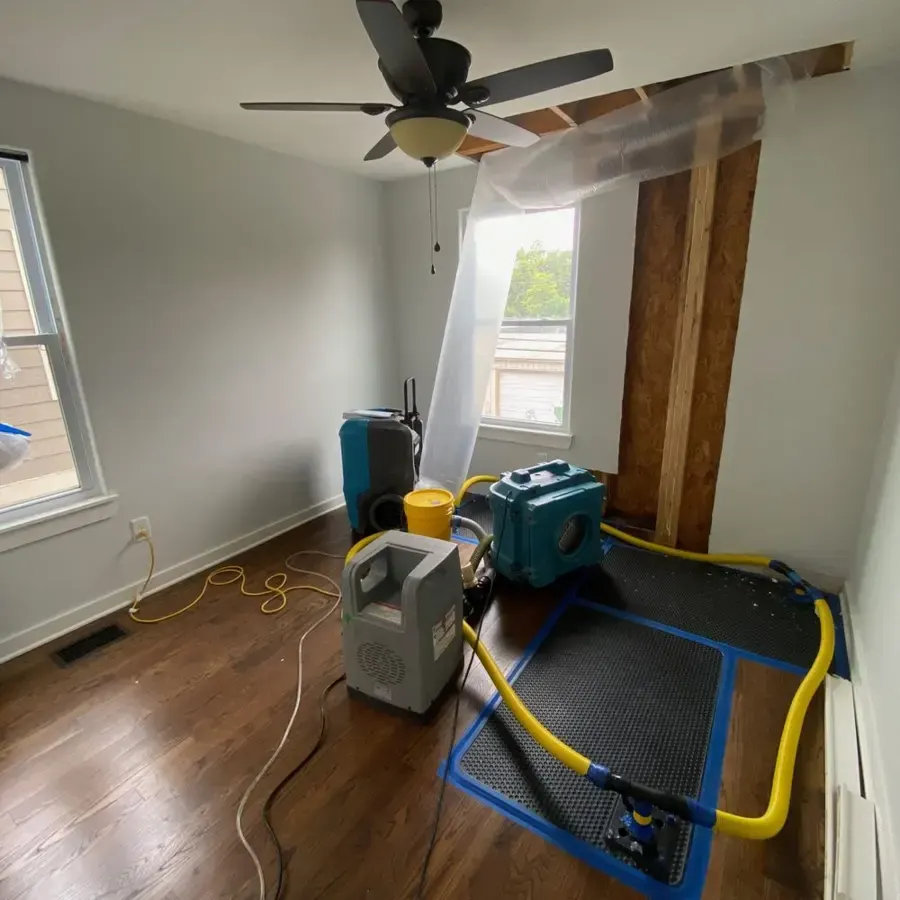
Every water loss ends the same way, with machines drying the structure until the numbers say dry. Millersville's housing mixes 1990s and 2000s builds with 532 mobile homes, and all of them have wood framing, subfloor and drywall that hold water long after the puddle is gone. In muggy Tennessee summers an open window adds moisture, so the drying team keeps the space closed and lets dehumidifiers do the pulling.
First steps for structural drying and dehumidification in Millersville
- 1
Close up in humid weather
Opening windows in summer brings moisture inside, and sealed rooms dry faster.
- 2
Leave machines running
Switching them off overnight lets moisture drift back into materials.
- 3
Leave doors as the crew set them
Open or closed, each door steers airflow.
- 4
Report new odors or stains
They can point to a wet spot that was missed.
What does structural drying and dehumidification cost in Millersville, TN?
Millersville structural drying usually runs $1,000 to $8,000. Dense floors or plaster, several rooms, a second level and a long equipment run all lift the price, while a single room of drywall stays low.
One area, light soaking
$1,000 to $2,500- Air movers placed
- One LGR machine
- Readings each day
Several rooms, deeper soak
$2,500 to $5,000- Walls and ceilings treated
- More dehumidifiers
- Moisture map kept
Hardwood or plaster
$5,000 to $8,000- Desiccant machines
- Floor mats
- Longer monitoring
Ranges are typical, not a quote: category of water, square footage, material class and how fast drying started move the number most. Run the water damage cost calculator for a closer range.
How structural drying and dehumidification is handled in Millersville
The tech who does the walkthrough maps moisture before any equipment goes down, so the drying plan matches what is actually wet. Equipment stays until the readings say dry, not until it looks dry.
- 1
Rate the loss
Category and class decide the plan and the machine count.
- 2
Place the equipment
Air movers, dehumidifiers and mats go in room by room.
- 3
Read every day
Air and material readings are logged each day.
- 4
Pull at the goal
Machines come out once materials match the dry sample.
How the class of loss sets the equipment
Crews rate each loss by how deeply water went into the materials. A Class 1 job is a small patch of low-absorbing surface. Class 4 is dense stuff that stores water deep inside, like hardwood, plaster, brick or concrete. That rating drives the air mover count and whether an LGR or a desiccant machine takes the lead.
- Air movers set to match each room's evaporation load.
- LGR dehumidifiers on most jobs, desiccant machines for Class 4.
- Drying mats on hardwood; see crawl space water damage for wood dried from below.
How the drying goal works
A dry part of the house supplies the comparison: the crew meters an unaffected piece of the same material and calls that the dry sample. Each wet material is checked daily, and machines stay until it lands within 2 to 4 points of the sample. The daily log doubles as proof for the claim file.
- Air temperature and humidity recorded every day.
- Each material's meter reading marked on the moisture map.
- Machines relocated whenever one room dries before another.
Why finishing matters
Sealing wet framing under fresh drywall and flooring locks moisture in, and the walls and floors of mobile homes are no exception. Hold repairs until readings say dry. The drying time estimator gives a typical window, and water extraction is the step that comes before it.
Structural drying and dehumidification across Millersville and nearby towns
Structural drying covers ZIP 37072, from the Slaters Creek area and Cartwright to Cimarron Trace, Langbrae Estates, North Pointe and Spring Hollow Road, in houses and mobile homes alike.
The same service nearby: structural drying and dehumidification in Gallatin, White House, Hendersonville.
Water damage restoration in Millersville · every town covered
Related water damage services in Millersville
Structural Drying and Dehumidification questions in Millersville, TN
Can box fans from a store do this?
They push damp air around, but without dehumidifiers the moisture returns to walls and floors.
What counts as dry?
A wet material is metered next to a dry sample of the same type. It counts as dry once the two numbers sit within 2 to 4 points.
Why is the equipment so noisy?
Air movers push large volumes of air across wet surfaces. The noise ends when the drying does.
Is hardwood worth drying?
Often yes, using mats and steady dehumidification, provided the work begins quickly.
How many days should I expect?
A contained Class 1 or 2 loss tends to finish within three to five days, while Class 4 materials run longer.
Who pays for the electricity?
The machines run on household power, and some insurers reimburse the extra cost, so ask yours.
Get the Millersville dry-out started.
Meters, not guesswork, show a dry-out is finished. The drying team keeps a daily log until the structure reads dry.
(888) 849-5796Begin structural drying- 24/7 dispatch for active water
- Dried to the IICRC S500 standard
- Daily readings for the claim file
- Find us on Google