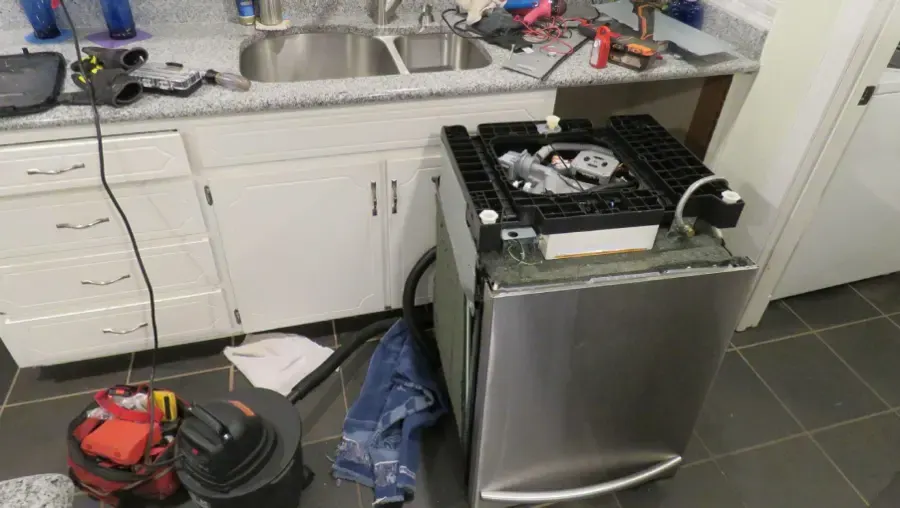
Most appliance leaks start small and stay hidden. A washer hose or dishwasher connection can drip for days under a floor before anyone sees a stain.
Key takeaways
- Appliance leaks often show up as soft flooring or a musty smell long before any puddle appears.
- Millersville has 787 renter occupied homes and 532 mobile homes, so these leaks affect rentals and manufactured homes as well as owned houses.
- The first step is to shut the water supply to the appliance and unplug it if it can be done safely.
- Drying has to reach the subfloor and the cabinet base, not just the surface of the floor.
- A renter should tell the landlord in writing and keep dated photos.
Who is affected in Millersville
Millersville has 2,595 housing units. Of these, 1,585 are owner occupied and 787 are renter occupied, and about 1,842 are single family detached homes.
The city also has 532 mobile homes, and the median home was built in 1993. A large share of homes date from 1990 to 1999, with 791 built in that decade and 461 from 2000 to 2009.
That mix of rentals, manufactured homes and houses from the 1990s and 2000s means appliance connections are now old enough to fail.
Only 92 housing units sit in buildings of 5 or more units, so most leaks here stay inside a single home. When a rental is part of a duplex or small building, a leak can still reach a neighbor.
Where washer and dishwasher leaks come from
The appliance itself is rarely the first thing to fail. A fitting, hose or drain connection usually gives out first.
A leak often runs only during a certain cycle, such as the drain or spin phase, which is why a quick check of a dry appliance can miss it.
The leak may only show while a cycle is running. A dry floor after the cycle ends does not mean the connection is sound.
- Washer supply hoses: rubber hoses that crack, bulge or loosen at the valve.
- Washer drain hose: a hose that slips out of the standpipe during a spin cycle.
- Dishwasher supply: a loose or corroded connection under the sink.
- Dishwasher door seal and drain: seals that wear out and drains that back up into the base.
- Refrigerator ice maker tube: a small tube that can leak behind the unit for weeks.
Why the damage is hidden
A leaking appliance sits against a wall or inside a cabinet, so water runs under the floor covering before it shows.
In a laundry room, water moves under vinyl and into the subfloor. In a kitchen, a dishwasher leak soaks the cabinet base and the floor beneath it.
By the time a stain shows, the floor underneath has often been wet for a while. That is why a moisture meter reading is more reliable than looking at the surface.
Signs to watch for
Look for floor covering that lifts, a soft spot near the appliance, a musty smell or dark edges at the baseboard.
A higher water bill with no change in habits can also point to a slow leak.
Mobile and manufactured homes
In a mobile home, the floor system is thinner than in a site built house, and water can reach the layers beneath it quickly.
That makes it important to check the floor around the laundry area, the kitchen and the bathrooms, and not just the visible puddle.
First steps at the appliance
Move quickly, but stay safe around water and electricity.
If the floor around the appliance is wet, do not stand in the water while handling the plug or the valve. Wait until the water supply is closed and the area is mopped.
- Shut off the water supply valve to the appliance.
- Unplug the appliance only if the floor around the plug is dry.
- Mop up standing water and set towels or a wet vacuum on the area.
- Photograph the leak, the hose and the wet floor.
- Do not run the appliance again until the leak is fixed.
Preventing the next appliance leak
Appliance leaks are among the easiest water losses to prevent. A few checks a year catch most of them before the floor is wet.
Rubber washer hoses are a typical weak point and should be looked at when the appliance is moved. A bulge, a crack or a rusty fitting means it is time to replace the hose.
- Look behind the washer and dishwasher for damp spots or rust on fittings.
- Replace supply hoses that are cracked, bulging or weeping at the ends.
- Do not run the washer or dishwasher while away from home.
- Keep the shutoff valves accessible and test that they close.
How the drying is done
The drying team starts with moisture readings around the appliance and out into the surrounding rooms. The readings show how far the water traveled.
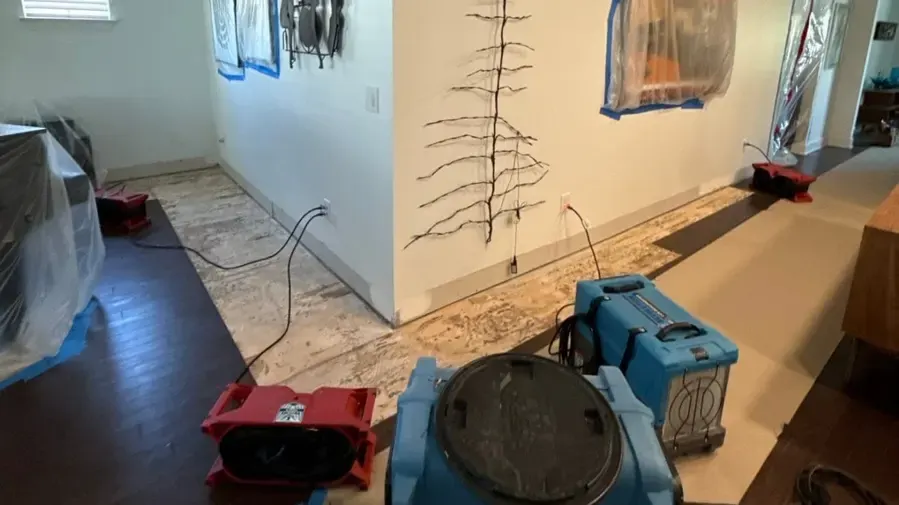
Wet flooring that cannot dry in place is removed, and cabinet kick plates may be pulled so air can reach the base. Air movers and dehumidifiers are then set to dry the subfloor and framing.
The structural drying work stays in place until readings reach the target, not just until the floor feels dry.
Insurance for appliance leaks generally pays for sudden and accidental water, not for a slow leak that went on for a long time. That is another reason to find leaks early and keep records.
- Moisture mapping of the floor and walls.
- Removal of flooring that stays wet.
- Air movers and dehumidifiers on the subfloor and cabinet base.
- A final check before the equipment is taken out.
Cabinets and the base of a kitchen
A dishwasher leak soaks the cabinet base and the toe kick, and water can sit trapped behind them. Pulling the kick plate lets air reach that space.
Particle board cabinet bases swell when they stay wet, so drying early can save the cabinet.
Laundry rooms
A washer leak wets the floor along the wall and under the machine. The floor covering is lifted back so the subfloor can dry from above and below.
Renters, landlords and next steps
In a rental, the leak should be reported to the landlord in writing, with dates and photos attached. Who pays depends on the lease and on what caused the leak.
For the full service, see appliance leak water damage in Millersville and the Millersville hub for every other service in town.
The same work for the main city is shown on the appliance leak water damage in Gallatin page.
Questions
How do I know if my dishwasher is leaking under the floor?
Signs include a soft floor near the dishwasher, a musty smell and swollen cabinet edges. A moisture reading confirms it.
Should I turn off the water to the washer after a leak?
Yes. Close the supply valve first, then deal with standing water. This stops new water from coming out of a split hose.
Can a mobile home floor be dried after a leak?
Often yes if it is caught early, but the layers under the floor need readings. Materials that stay wet may have to be removed.
How many homes in Millersville are rentals?
The city has 787 renter occupied homes out of 2,595 housing units, so rentals are a large part of the housing.
Who pays for a washer leak in a rental?
That depends on the lease and on what caused the leak. Tell the landlord in writing and keep photos and dates.