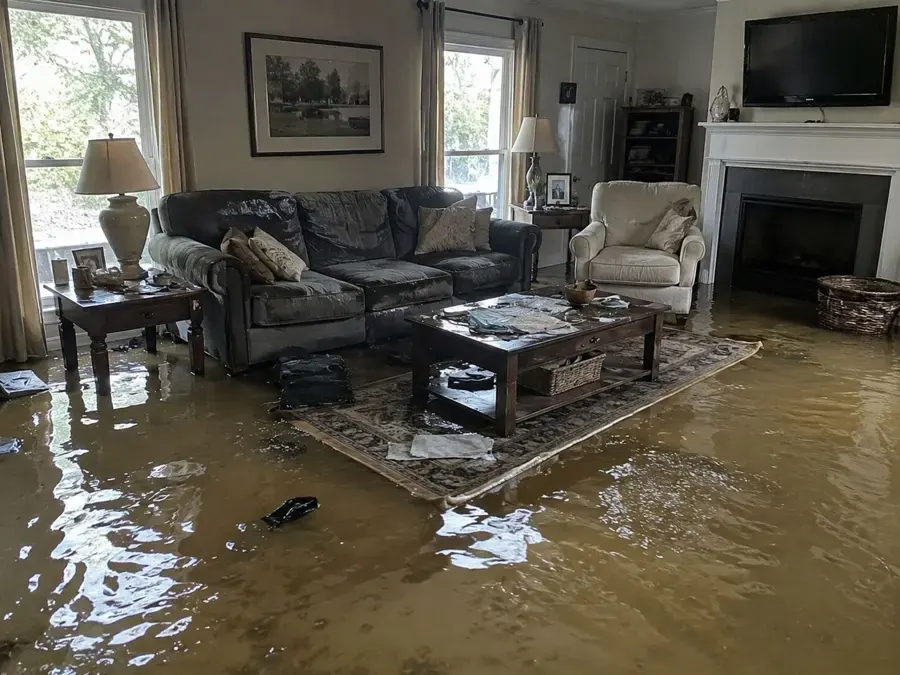
Hendersonville sits on the northern shore of Old Hickory Lake, with Drakes Creek flowing through town into it. When either one spills into a house, the water is a different kind of problem than a leaking pipe.
Key takeaways
- Creek and lake floodwater is treated as Category 3, so wet porous materials are removed rather than dried in place.
- Drakes Creek Park flooded three times by April 4, 2025, which shows how often this creek leaves its banks.
- Clay soil drains slowly, so water that reaches a foundation can stay for a while.
- Extraction comes first, then removal of damaged materials, cleaning and structural drying.
- Flood damage is not a plain leak, so photos and a written scope matter for the claim.
Why creek and lake water is handled differently
A supply pipe leak puts clean water into a house. Water from Drakes Creek or Old Hickory Lake comes with mud, runoff and anything else it crossed on the way in.
That is why flood cleanup follows a stricter set of steps. Floodwater is classed as Category 3, and anything porous that it touches is treated as contaminated.
The category is set by where the water came from, not by how clear it looks. Brown or clear, creek water is handled the same way.
Many homeowners assume that if the water looks clean, it is fine. That is a common mistake, and the category rule exists so nobody has to guess.
Hendersonville flood history in short
The area has seen this before. On May 2, 2010, Old Hickory Dam opened all of its floodgates after 13.57 inches of rain fell at Nashville over May 1 and 2, and Hendersonville flooded.
More recently, 4 to 5 inches of rain on March 27, 2021 flooded Drakes Creek Park, Memorial Park and parts of Mallard Point Park, with isolated home flood damage. Firefighters rescued two teens from Drakes Creek near Durham Farms that month.
By April 4, 2025, Drakes Creek Park had flooded three times.
Hendersonville Fire took part in water rescues during the May 19, 2017 flash flooding in Sumner County, when 27 people were rescued. The event shows how quickly a creek can turn a dry day into an emergency.
- Drakes Creek: flows through Hendersonville into the lake.
- Station Camp Creek: named in the Sumner County Flood Insurance Study as a flooding source.
- Sanders Ferry Road parks: Memorial Park and Mallard Point Park also take floodwater.
- Hendersonville takes part in the National Flood Insurance Program and regulates building in floodplains.
The first hours inside the house
When floodwater is inside, safety comes before anything else.
Shut off electricity to the flooded area if it can be done safely, and stay out of standing water, which can hide live wiring.
What a homeowner can do
Photograph the high water mark on walls and furniture before anything is moved.
Move small valuables to a dry place, but leave heavy furniture alone.
What to leave alone
Do not use a household vacuum on standing water or run fans that touch wet wiring.
Do not wash or reuse porous items such as carpet pad and upholstered chairs that soaked in floodwater.
Extraction, removal and drying in order
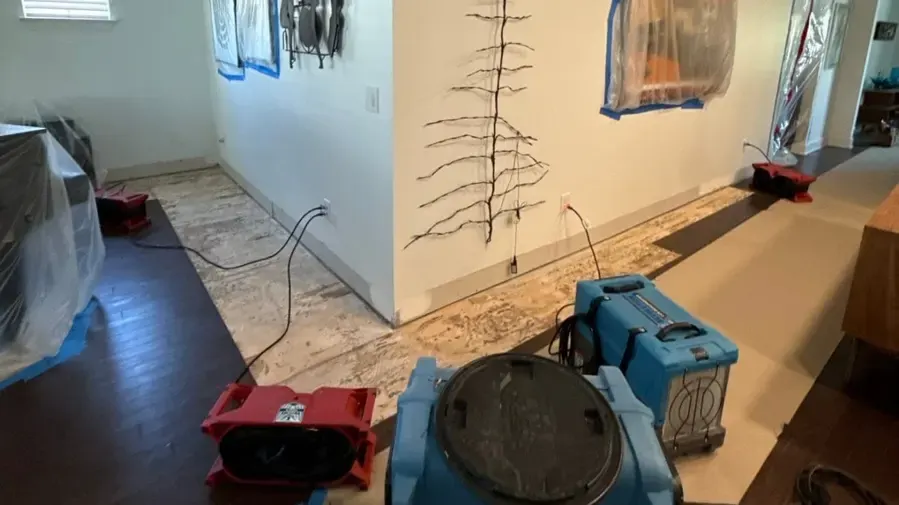
The extraction crew starts by pumping standing water with truck mounted or portable pumps. Pulling the bulk water first keeps it from wicking into drywall and wood.
Next, wet materials that cannot be cleaned are removed. That list usually includes carpet, pad, baseboard and the lower section of drywall that was in contact with the water.
Some items can be saved. Hard, nonporous belongings such as glass, metal and sealed plastic can be washed and disinfected, while mattresses and upholstered furniture usually cannot.
- Extraction: standing water pumped out of every wet room.
- Removal: carpet, pad and wet drywall that took in floodwater.
- Cleaning: hard surfaces washed and treated with an antimicrobial.
- Drying: air movers and dehumidifiers run until readings reach the target.
What gets checked after the bulk water is gone
The crew checks the insulation in walls and under floors, since it soaks up creek water and holds it.
Ducts and the area around the water heater and furnace are checked as well, because flood water often reaches low equipment first.
Hendersonville homes and the water they face
Hendersonville has a wide mix of housing. Older areas such as Cherokee Woods have homes from the 1960s to the 1990s, from mid century ranches to lakefront estates, while Durham Farms and Norman Farm are still being built.
Condos and townhomes are concentrated near the lake around Sanders Ferry, Sterling Cove and Plumlee. In those buildings, floodwater at ground level can affect several units at once.
The mix matters because each type of home holds water in a different place. A ranch may take it through the slab edge, a lakefront house through a crawl space or a walkout area, and a condo through a ground floor unit.
- Ranch houses: water enters at doors and low openings and spreads across one level.
- Lakefront and creekside lots: higher exposure when the lake or creek rises.
- Condos and townhomes: shared walls carry water to neighboring units.
Why clay soil makes the drying harder
Hendersonville lies in the Nashville Basin, with limestone and shale under mostly clay soil. Clay holds rain against crawl space walls and footings after heavy storms.
Water that reaches a foundation does not always leave quickly, so a crawl space or low room can stay damp even after the creek has dropped.
That is why structural drying is read with a moisture meter and not judged by how the floor looks.
Floodwater claims often involve more than one policy. A standard homeowners policy and flood coverage under the National Flood Insurance Program are separate, so ask the insurer which applies.
Water from the creek or the lake: what to expect
The work is the same whether the water came from a rising creek, from lake level or from storm runoff on a creek lot. What changes is how deep it went and how long it stayed.
The full process is laid out on the storm and creek flood cleanup in Hendersonville page, and the pumping step is on the water extraction page.
The Hendersonville hub lists the full set of services available in town.
Questions
Is floodwater from Drakes Creek considered contaminated?
Yes. Creek and lake floodwater is classed as Category 3, so porous materials it touched are usually removed instead of dried.
Can wet carpet be saved after a creek flood?
Carpet and pad that sat in floodwater are normally removed. The hard floor and framing underneath are cleaned and dried.
Does Hendersonville have a flood history?
Yes. Floods hit in May 2010 and March 2021, and Drakes Creek Park had flooded three times by April 4, 2025.
Why does water stay in my crawl space after the creek drops?
Clay soil drains slowly and holds rain against foundation walls, so water can stay under a house for some time after the creek falls.
What should I photograph before cleanup starts?
Take photos of the high water mark on walls, the wet floors and damaged belongings. Clear photos help with the insurance claim.