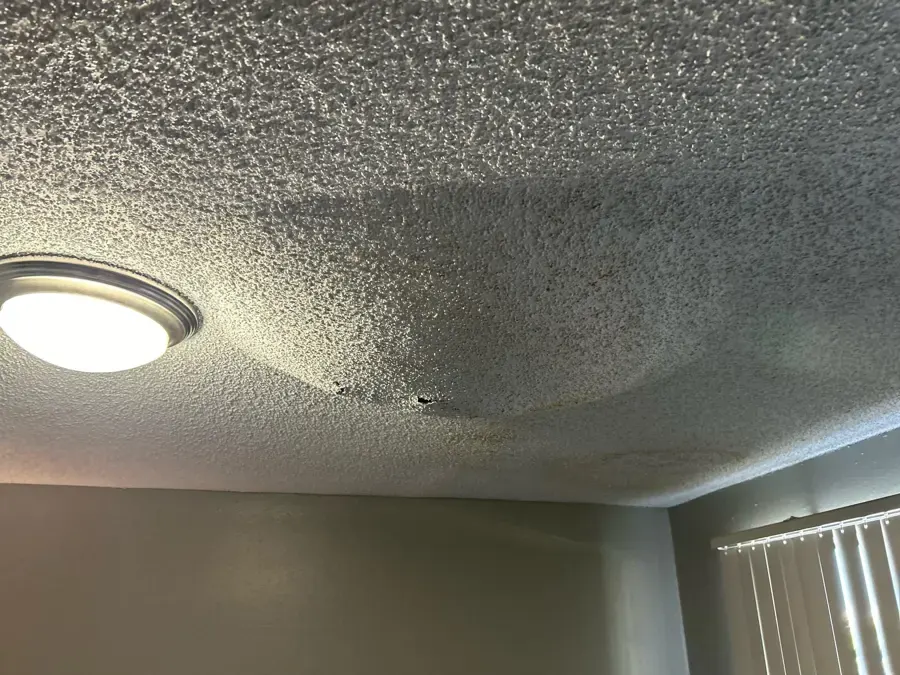
A brown stain spreads across the ceiling and the unit above is not yours. In Lebanon townhomes and apartments, that is a common way for water damage to start.
Key takeaways
- A ceiling leak from an upstairs unit is usually a supply or drain problem in the unit above, and it can run for hours without being noticed.
- The first steps are to keep people away from the wet area, shut off power to ceiling fixtures and tell the landlord or association.
- Wet ceiling drywall and the insulation above it often need to be opened so the cavity can dry.
- Water travels through shared walls and floors, so the next unit over may need readings too.
- Photos, dates and written messages protect a renter or owner in any dispute about the leak.
Why upstairs leaks are common in Lebanon
Lebanon has grown quickly, and many newer townhomes and apartments sit along Castle Heights Avenue, Hunters Point Pike, Coles Ferry Pike and Hartmann Drive.
About 37.6 percent of units in the city are renter occupied, so many leaks involve a tenant, a landlord and a neighbor at the same time.
Townhomes such as Campbell Place and Cedar Station Townhomes were approved along North Castle Heights Avenue, which adds more multi level homes with bathrooms above living areas.
A leak between units also raises a practical question, which is who can enter whose home. The landlord or manager usually needs to arrange access, so asking early saves time.
Where upstairs water usually comes from
In most cases the source is simple and ordinary. A fixture or appliance upstairs lets water out, and gravity brings it down.
- Bathroom: a tub overflow, a loose toilet seal or a leaking supply connection.
- Laundry: a washer hose that splits or a drain that backs up.
- Kitchen: a dishwasher supply hose or a leaking sink trap.
- Water heater: a tank or pan overflow in an upstairs closet.
What to do when the ceiling starts to drip
Act on the side you control. You cannot shut off the neighbor's water, but you can limit what happens in your own unit.
A leak that runs only when the upstairs tenant uses a shower or washer is easier to trace if you note the time and what was running when the stain grew.
In your unit
Move furniture and valuables out from under the stain, and set a bucket under any drip.
Turn off power to the ceiling light or fan at the panel if water is near it. Do not touch wet fixtures.
With the neighbor, landlord or association
Tell the landlord, property manager or association right away, in writing, so there is a record of the date.
Ask that the water to the unit above be shut off until the source is found. That stops new water from coming down.
Opening the ceiling and drying it
A bulging or sagging ceiling holds water. The restoration crew may poke a small relief hole or cut the drywall open so the water can drain safely, which can also save the ceiling around it.
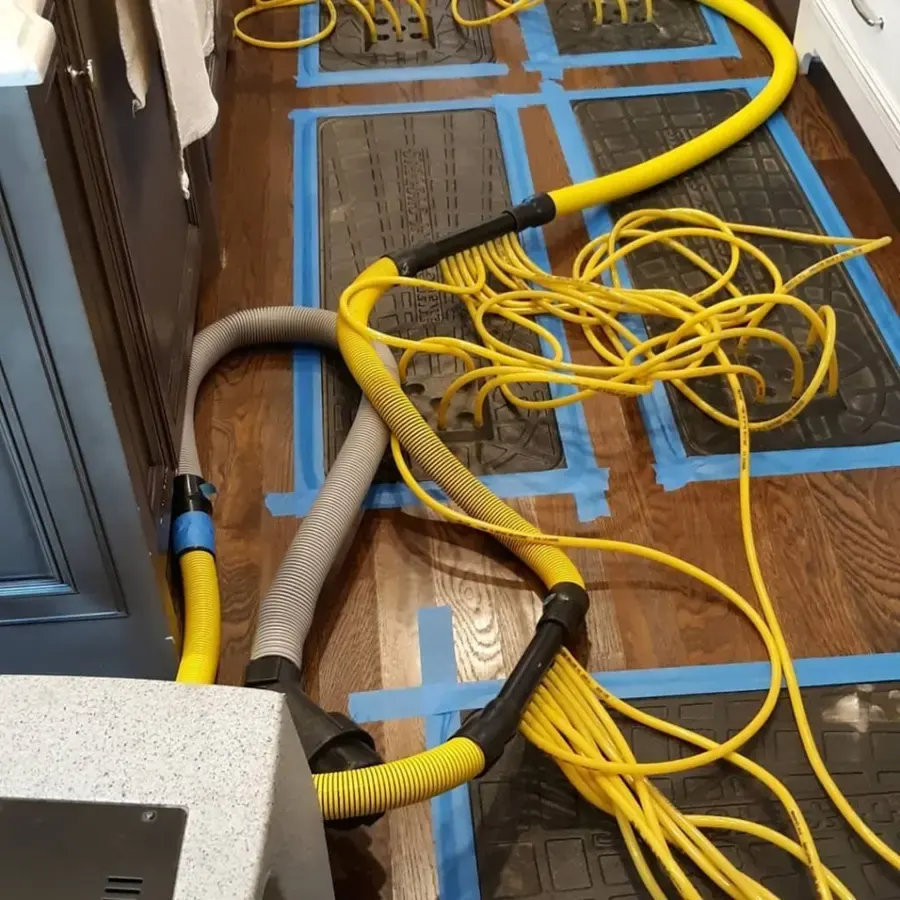
Wet insulation above the ceiling comes out, because it keeps the drywall wet and slows drying. The joist bays are then dried with air movers and dehumidifiers.
Moisture readings are taken in the ceiling, the walls below it and the floor, since water that came down a wall can reach the baseboard.
- Relief cut: releases trapped water from a sagging ceiling.
- Insulation removal: stops it from keeping the drywall wet.
- Readings in the ceiling, walls and floor.
- Equipment stays until readings reach the target.
What stays and what goes
If the leak came from a clean supply pipe and was caught early, the ceiling drywall can sometimes be dried in place. If it sagged, stained deeply or sat wet for days, it is cut out and replaced.
Paint and texture are the last repairs. They go on only after the framing and drywall read dry.
What a homeowner can do while equipment runs
Keep doors to the wet room closed so the dehumidifier works on the right air. Do not turn the equipment off to save noise, because drying stops when the equipment does.
What a wet ceiling costs if it is left
A wet ceiling is slow to dry because the insulation above it acts like a sponge. The longer it stays wet, the more likely the drywall is to sag, tear or stain permanently.
In humid Middle Tennessee weather, damp materials stay damp for a long time. That is why quick action matters more than a quick look.
- Hours: drywall begins to soften and stain.
- Days: insulation holds water and the cavity stays wet.
- Weeks: wet framing and drywall can develop odors and surface growth.
Water moves sideways in shared buildings
In a townhome or apartment, shared walls and floors let water travel to the neighbor on either side, and not just the unit below.
That means more than one unit may need drying after a single leak. Readings in the adjoining rooms show where it went.
The details of how multi unit buildings are handled are on the apartment and townhome water damage in Lebanon page.
Hartmann Plantation Townhomes and Coles Ferry Townhomes are examples of attached homes where several units share walls. Water entering a shared wall cavity can move well beyond the room where it first appeared.
Records, responsibility and next steps
Who pays is a matter for the lease, the owner or association and the insurers involved, and the restoration team does not decide it. What helps in any case is a clear record.
Take photos with dates, keep copies of messages and write down when the leak was first seen. For ceiling specific work, see ceiling leak water damage in Lebanon.
The Lebanon hub lists every service in town, and apartment water damage in Gallatin shows how the same work is described for the main city.
Questions
Should I call my landlord or the water damage crew first?
Tell the landlord or property manager first, in writing, so the water to the upstairs unit can be shut off. Then arrange drying for your own unit.
Is it safe to leave a sagging ceiling alone?
No. A sagging ceiling holds water and can fall. Keep people away from it and have it checked and opened.
Can the leak reach my unit even if the stain is small?
Yes. Water spreads inside the ceiling cavity before it shows. A small stain can sit under a much larger wet area.
Will the neighbors beside me be affected too?
They can be. Shared walls and floors carry water sideways, so readings in nearby rooms show whether more units need drying.
What records should a renter keep?
Keep dated photos, copies of messages to the landlord and a note of when the leak started. These help with any dispute or claim.