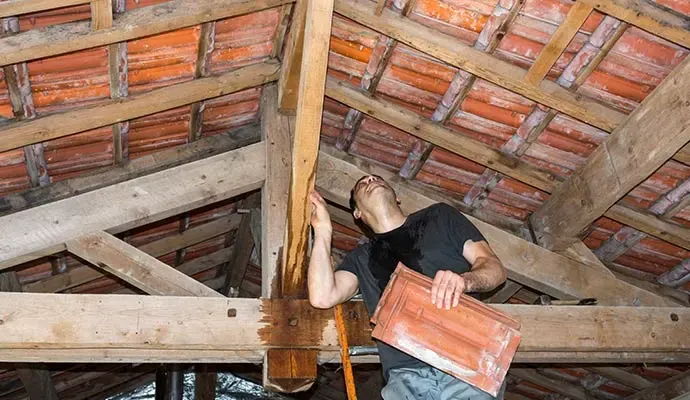
The December 9, 2023 EF-2 tornado removed roofs in Foxland Harbor, Fairvue Plantation, Woodvale and Patterson Farms. The wind was over quickly, but the water damage from open roofs kept growing with every rain after it.
Key takeaways
- A roof opening lets rain into the attic first, and the ceiling below shows damage later.
- A tarp is a temporary cover that buys time. It is not a repair.
- Wet attic insulation is heavy, holds water against the drywall and usually has to come out.
- A ceiling that sags or stains needs moisture readings even after the roof is patched.
- Spring storm season makes every unrepaired opening a repeat risk.
What the 2023 tornado left behind in Gallatin
When the EF-2 tornado crossed Gallatin on December 9, 2023, it took roofing from houses in Foxland Harbor, Fairvue Plantation, Woodvale and Patterson Farms.
Open roof decking turns every later rain into an indoor problem. Water runs through the gap, soaks the insulation and then works down to the ceilings and walls.
Even a house that was not hit directly can have lifted shingles or cracked flashing from storm winds, and those small openings leak the same way.
In the days after a tornado, roofers are in high demand, so a tarp may be the only cover on a roof for a while. That makes the first temporary fix more important, not less.
How a roof opening becomes a ceiling problem
Water does not always drop straight down. It follows rafters, runs along the top of the ceiling drywall and spreads before it shows a stain.
That is why the first visible spot on a ceiling is often far from the actual opening in the roof.
A ceiling stain that returns after a patch usually means water is still moving inside the framing. A single dry day does not mean the cavity is dry.
Stage one: the attic
Insulation soaks first. Wet batts or blown insulation can hold a lot of water.
That weight presses on the ceiling drywall below and keeps it wet for as long as the insulation stays in place.
Stage two: the ceiling
The drywall absorbs water, sags and stains. A brown ring, a bubble in the paint or a soft spot underfoot in a bedroom are all signs the ceiling has taken on water.
If light fixtures or ceiling fans are in the wet area, the power to them should be shut off at the panel.
What a tarp does and does not do
A tarp is a cover fastened over an opening to keep new rain out until a roofer can make a lasting repair. The restoration team installs tarps to stop more water from entering the house.
It does not dry anything that is already wet, and it does not fix the roof. Wind can lift a poorly fastened tarp, so the edges and fastening matter.
- Cover the whole opening and the area around it, not just the hole itself.
- Fasten the edges so wind cannot get underneath.
- Check the tarp after every storm, since a loose corner lets rain back in.
- Keep photos of the damage before and after covering, for the insurance file.
Pulling wet insulation and opening ceilings
The next step is the part homeowners do not expect. Wet attic insulation is removed, because leaving it in place keeps the drywall wet from above.
If a ceiling is sagging, the drying team may cut it open to release trapped water and to look at the joist bays above it. A cut made in the right place can save the rest of the ceiling.
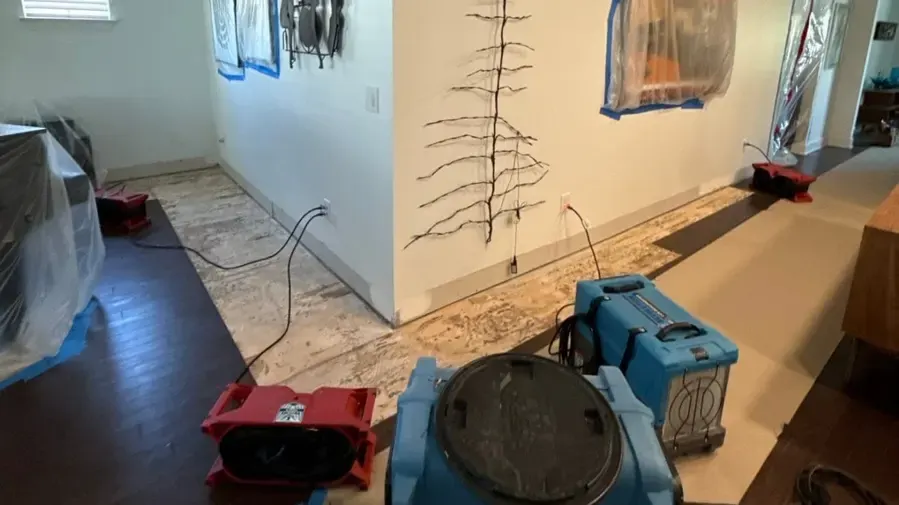
After removal, the attic and the ceiling cavity are dried with air movers and dehumidifiers until the readings come down.
Plastic sheeting inside the house can protect a floor or furniture while the roof is waiting for repair. It should never trap a pool of water, so it is checked often.
- Attic insulation: removed where it is wet or compressed.
- Ceiling drywall: cut open if it sags, bubbles or holds water.
- Joist bays and top plates: dried and read before anything is closed back up.
- Wall tops: checked, since water can run down inside a wall from the attic.
Why drying matters even after the roof is fixed
A new roof does not dry the house. Water already in the framing and drywall stays there unless it is pulled out.
In humid weather, damp materials in an attic can stay wet for a long time, and that moisture can spread into the framing and cause problems. Controlled drying handles that before repairs close it in.
The same pattern applies to a smaller storm leak. A roof patch stops new water, and ceiling leak water damage work deals with what is already inside.
What to tell the insurance adjuster
A storm opening is a covered peril on many policies, but the details depend on the policy. Records make the conversation easier whatever the policy says.
The adjuster will want to know when the storm hit, what the roof looked like and what happened after the opening was covered.
- Photos of the roof opening and any debris that caused it.
- Photos of wet ceilings and attic insulation, with dates.
- Receipts for the tarp and any emergency work.
- A written note of every rain after the storm and what leaked in.
Getting ready for the next spring storm season
Gallatin has a humid subtropical climate and a real spring storm season. A roof that was only tarped or patched in a hurry should be checked before spring, and permanent repairs should be scheduled.
The roof leak risk check is a quick way to see which signs to look for around the house.
For a house with an open roof or a wet ceiling right now, the full service is described on the storm roof leak water damage page.
- Look for lifted or missing shingles after any wind event.
- Check the attic for damp insulation or dark stains on the wood.
- Watch ceilings for new rings after each rain.
Questions
Does a tarp stop water damage from a storm opening?
A tarp stops new rain from entering, but it does not dry what is already wet. The attic and ceiling still need moisture readings and drying.
Does wet attic insulation always have to be removed?
Insulation that is soaked or compressed usually has to come out. Left in place, it keeps the ceiling wet from above and slows drying.
Why did my ceiling stain show up away from the roof damage?
Water travels along rafters and the top of the drywall before it appears. The stain often shows up away from the opening.
Should I turn off the lights if the ceiling is wet?
Yes. If water is near a light fixture or ceiling fan, shut off that circuit at the panel and keep away from the wet area until it is checked.
Is storm roof damage covered in the same way as a pipe leak?
Coverage depends on the policy, so documenting the damage with photos and keeping receipts is the safe habit. The insurer decides what is covered.