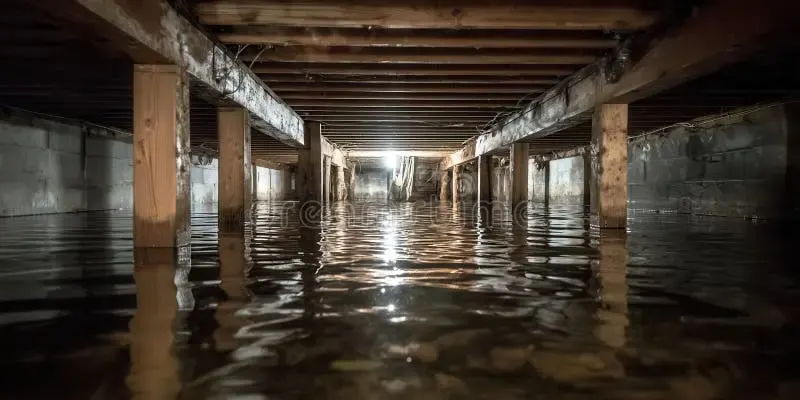
In May 2024, creek water on Barton Drive did more than flood yards. It went under houses and reached floors and ductwork, where nobody could see it.
Key takeaways
- Creek water in a crawl space is treated as contaminated Category 3 water, not as a simple leak.
- The water that matters is often out of sight: under the floor, around ductwork and inside insulation.
- Thin clay mixed soil over limestone drains slowly, so water can sit under a house long after the creek drops.
- Soaked insulation, vapor barrier and duct wrap come out first, then the joists and subfloor are dried to a measured target.
- A house that looks dry on top can still be wet underneath, so moisture readings come before any repair.
What the Barton Drive flood of May 2024 showed
The flood along Barton Drive and Town Creek in May 2024 is the clearest recent example in Gallatin of creek water going under a house.
Many homes in the area sit on crawl spaces. When the creek rose, water entered those low spaces and climbed high enough to reach the floors and the ductwork hanging below them.
That is a different problem from a leaking pipe. A pipe leak is clean water from one spot, while creek water carries silt, yard runoff and whatever else the creek picked up on the way.
Why water lingers under Gallatin houses
Gallatin sits over Nashville Basin limestone with a thin layer of clay mixed soil on top. That soil drains slowly, so rain pools near foundations and in crawl spaces instead of soaking away quickly.
East Camp Creek and its tributary Town Creek run through the city, and Station Camp Creek and Bledsoe Creek are other named waterways in the Gallatin area. Any of them can matter when heavy rain meets saturated ground.
- Slow drainage: water stays against foundation walls after the creek has already dropped.
- Low spaces fill first: a crawl space is usually the lowest part of the house, so it collects what the yard sheds.
- Hidden wet zones: floor insulation, duct wrap and the underside of the subfloor stay wet when no one looks.
Why ductwork and floors are the hidden loss
A crawl space under a Gallatin house often holds the supply ducts, the floor insulation and the plumbing runs. When creek water reaches that height, all of it is exposed at once.
Wet ducts matter because they connect to every room. Moisture and silt left inside them can travel with the air long after the visible water is gone.
The floor above is the other quiet casualty. Water vapor rises into the subfloor and the wood flooring, so a floor can start to cup weeks after the water left the crawl space if it was never dried.
- Ducts: inspected for water, silt and wet wrap before the system is used again.
- Insulation: heavy, sagging batts are a sign it has absorbed water.
- Subfloor: darkened or swollen edges show where moisture has been sitting.
What to check before anyone goes under the house
Creek water is not safe to walk through, and a crawl space has wiring, ducts and sharp edges that make it worse.
A homeowner can learn a lot from the living area first.
- Soft or cupped floors: wood that feels spongy or has started to rise points to water below.
- Musty smell at floor vents: moisture is traveling through the ductwork.
- A heating or cooling system that struggles or smells: wet ducts and wet insulation change how air moves.
- Standing water seen through the access door: take a photo and leave it alone.
Safety first
Turn off power to the crawl space circuits at the panel if it can be done without stepping in water.
Do not run the heat or air conditioning while ducts are wet, since that can spread contaminated moisture through the rooms.
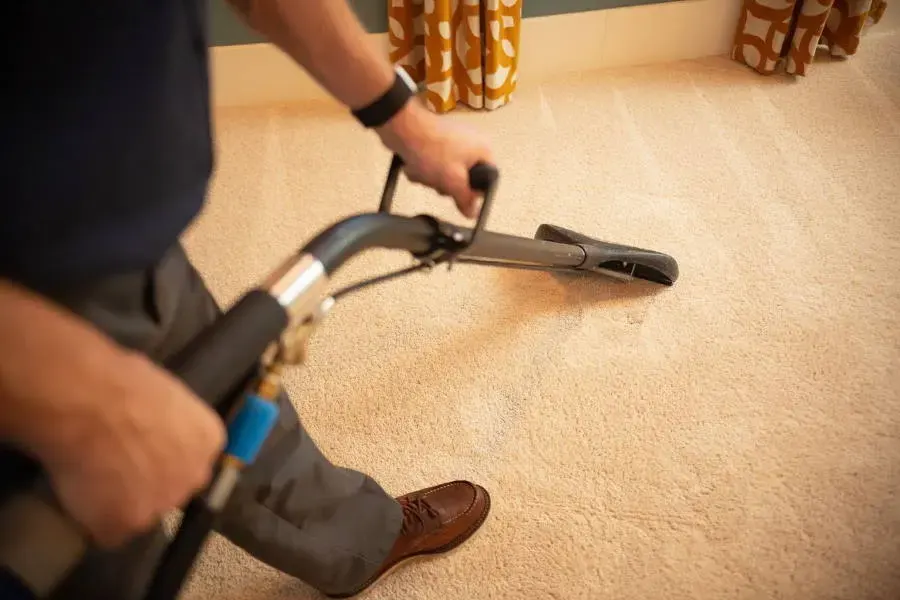
How the crawl space is cleaned out
The first job is getting the water out. The extraction crew pumps the standing water and then removes what cannot be saved.
Porous materials that sat in creek water, such as batt insulation and torn vapor barrier, go out because they stay wet and hold contamination.
What comes out
Wet insulation hanging under the floor is bagged and removed so the subfloor can breathe.
Damaged duct wrap and sections of flex duct that took in creek water are replaced, not wiped off.
What stays and gets cleaned
Floor joists, piers and the underside of the subfloor are solid wood or masonry, so they are cleaned and dried in place.
An antimicrobial is applied after the debris is out, because creek water is classed as Category 3.
Drying the floor system
Once the bulk water and debris are gone, the drying team sets air movers and dehumidifiers to pull moisture out of the framing. Under a house, drying needs controlled air flow and humidity control because the space is closed in and damp by nature.
Moisture readings are taken in the joists, the subfloor and the wood flooring above. The goal is to bring framing to within 2 to 4 points of a dry reference, which is the target used in structural drying.
Flooring above gets read too, since hardwood and laminate can look fine while the boards are still holding water. The structural drying work continues until the readings say the wood is dry, not until it looks dry.
- Readings in the joists and subfloor, taken more than once.
- Dehumidifiers sized for a closed space.
- Air movers aimed along the floor system, not at one spot.
- A final check of the flooring above before equipment leaves.
When to call and what to ask for
Any time creek water or storm runoff enters a crawl space, the safe assumption is that it is more than a puddle.
A written scope that names the extraction, the removal of wet materials, the antimicrobial step and the moisture readings makes the work easier to follow and easier to document for an insurer.
For the full service, see crawl space water damage in Gallatin and storm and creek flood cleanup. The drying time estimator gives a rough idea of how long equipment may need to run.
Questions
Is creek water in a crawl space considered dirty water?
Yes. Water from a creek is treated as Category 3, which means it may carry contamination. Wet porous materials are removed and the framing is cleaned and dried.
Can wet crawl space insulation be dried and kept?
Usually not. Insulation that sat in creek water holds moisture and contamination, so the drying team removes it and replaces it after the framing is dry.
How do I know if water got under my Gallatin house?
Signs include soft or cupped floors, a musty smell at the vents and standing water seen through the crawl space access. A moisture meter reading confirms it.
Why does water stay under houses after the creek goes down?
The soil in Gallatin is thin clay mixed soil over limestone and it drains slowly. Water that has entered a crawl space has few ways to leave without pumping.
Should I run the furnace or air conditioner after a creek flood?
Not while the ducts are wet. Running the system can push moisture and contaminated air into the living areas until the ducts are checked.